Planning a birdwatching trip to Sri Lanka? Bundala National Park is one of the country’s best destinations for bird lovers, with hundreds of resident and migratory species. Learn when to visit, what birds to look for, and how to plan your safari.
Why Is Bundala National Park a Birdwatching Hotspot?
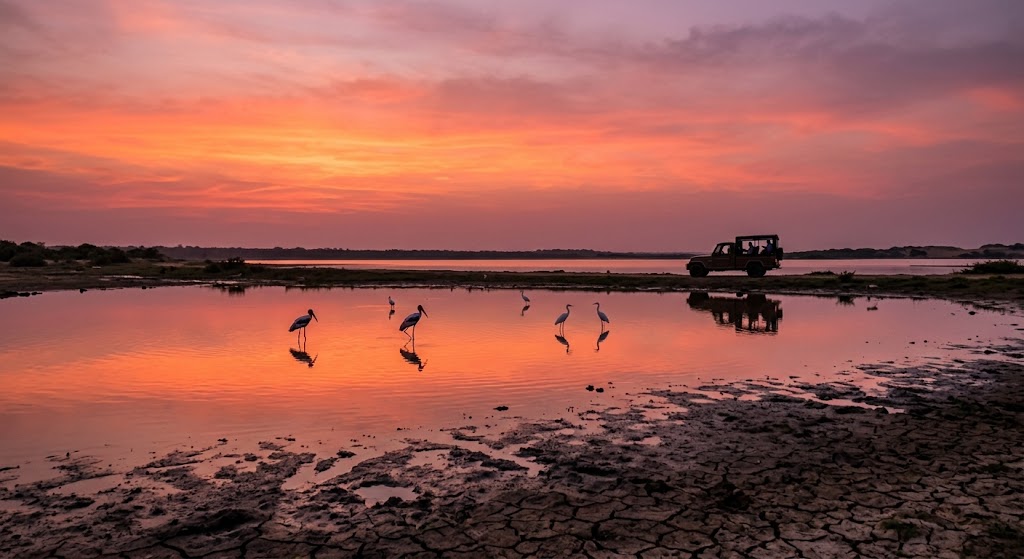
Bundala sits on Sri Lanka’s southern coast near Hambantota, a mosaic of four brackish lagoons, mudflats, sand dunes, and scrub jungle that was declared Sri Lanka’s first Ramsar Wetland and later a UNESCO Biosphere Reserve. That combination of habitats packed into one park is what pulls in close to 200 recorded bird species, a number that puts it among the most significant wetland sites anywhere in South Asia.
Unlike Yala next door, which draws crowds chasing leopards, Bundala stays quieter and rewards visitors who come specifically for the birdlife rather than treating it as a side stop. The flat, open terrain also makes spotting easier than in denser forest parks.
Best Time for Birdwatching in Bundala
Of Bundala’s roughly 200 bird species, around 58 are migratory, arriving from as far as Siberia and Central Asia as the northern winter sets in. Numbers build through September and October, hold strong through the core season, and begin thinning by March as birds head back north to their breeding grounds.
January and February typically deliver the highest concentrations, when water levels in the lagoons sit at the right depth for feeding activity. If you’re planning a trip specifically around the migration, this narrow window is worth building your dates around rather than treating as a rough guideline.
Greater Flamingos and Other Birds of Bundala National Park
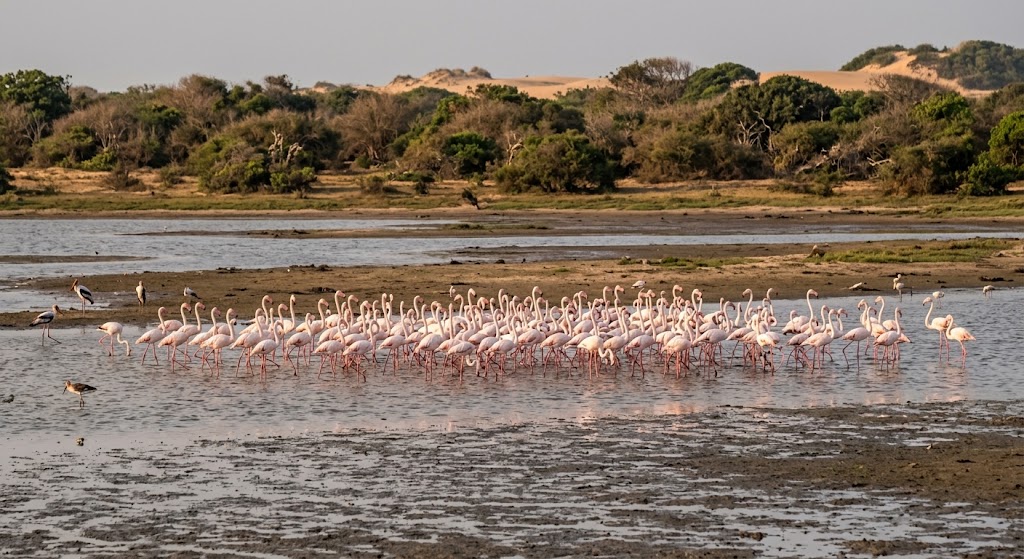
The greater flamingo is Bundala’s signature sighting, with flocks gathering in the hundreds or thousands during peak season, one of the park’s most photographed spectacles. Alongside them, look for Eurasian spoonbills, painted storks, and the rarer black-necked stork.
Wader species round out the list in large numbers: curlew sandpiper, marsh sandpiper, greenshank, and several plover species feed along the mudflats in mixed flocks that can number in the thousands on a strong day. Rarer visitors like the broad-billed sandpiper and red-necked phalarope turn up occasionally for those who know what to look for and where to look.
Resident Birds You Can See Year-Round in Bundala
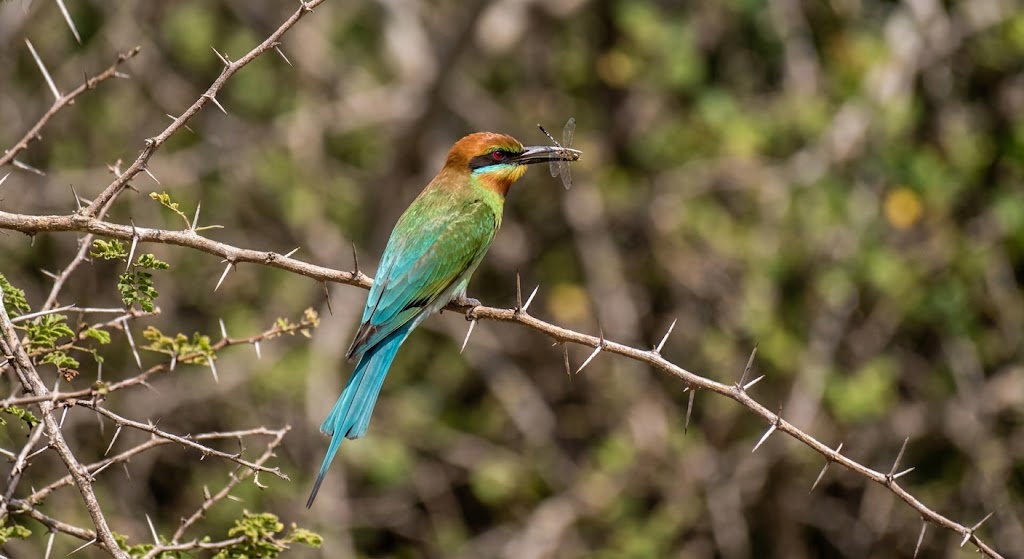
Bundala’s appeal doesn’t disappear outside migration season. Resident water birds, including several heron and egret species, stay through the year, along with the blue-tailed bee-eater’s turquoise flash breaking out of the scrubland to catch insects mid-flight.
Dry season months from May to September, when migratory numbers are lowest, still concentrate resident wildlife around the remaining water sources as smaller pools dry up. It’s a different kind of visit; fewer species overall, but often closer, more concentrated sightings.
Best Time of Day for Birdwatching in Bundala
Early morning and late afternoon consistently outperform midday for both bird activity and photography, with cooler temperatures keeping birds feeding rather than resting in shade. Morning drives also benefit from softer light across the lagoons.
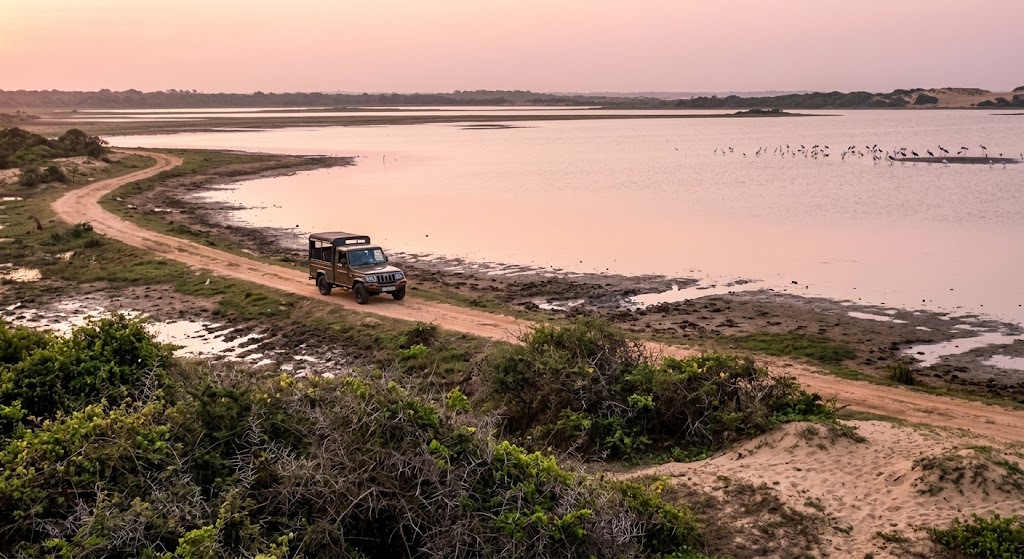
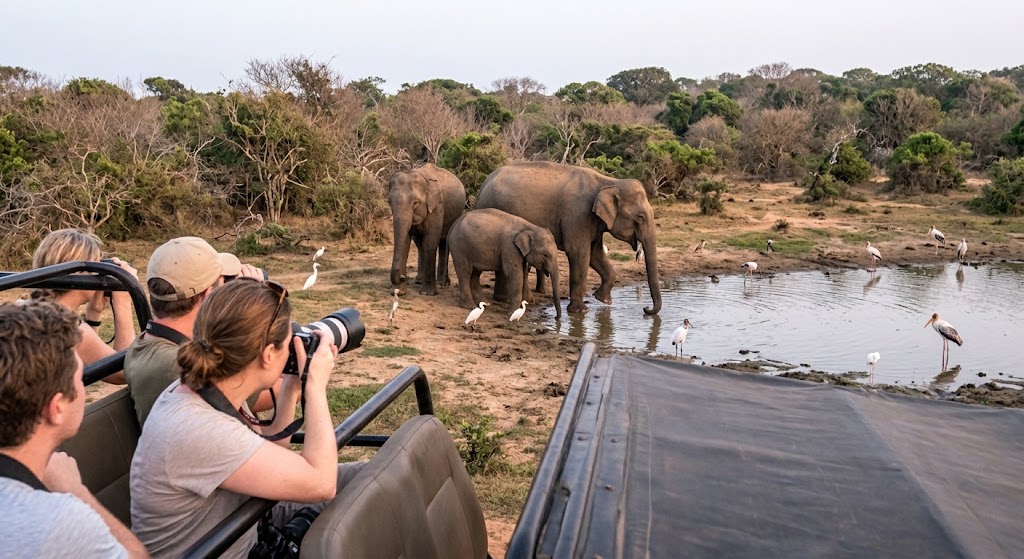
Jeep safaris are the standard way through the park, with routes shaped around whichever lagoons currently hold the most water and feeding activity. Ask your guide which lewaya has the strongest numbers that week rather than assuming the route stays fixed season to season.
Wildlife You Can See at Bundala National Park Beyond Birds
Birds are the main draw, but Bundala holds other wildlife worth watching for. A small, fluctuating population of elephants moves through the park, along with spotted deer, wild boar, and grey langur. Estuarine crocodiles are common in the lagoons and waterways.
Turtles nest on Bundala’s beach at night during their season, adding another reason to extend a visit beyond a single morning drive if your schedule allows it. None of this competes with the birdlife for top billing, but it rounds out what’s otherwise a fairly specialised trip, especially for travellers bringing along anyone less focused on birds specifically.
Photography Tips for the Lagoons
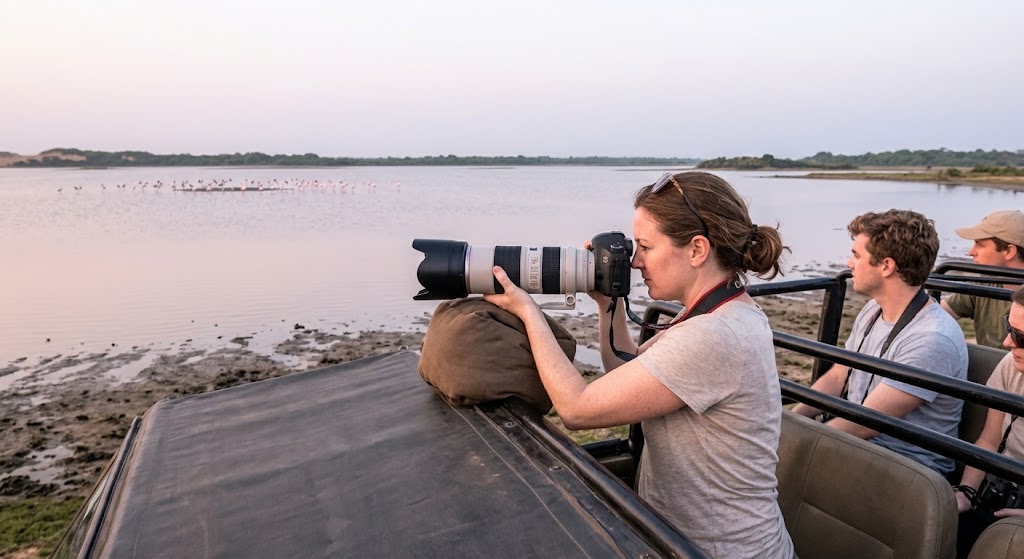
Bundala’s open landscape makes for long, uninterrupted sightlines across the water, which suits a longer lens more than the close-range work suited to forest parks. Flamingo flocks photograph best mid-morning, once light has softened but before heat haze builds over the lagoons.
Shooting from inside the jeep at engine-off is standard practice, since sudden movement or noise scatters wader flocks quickly. Patience matters more than positioning here, staying still near an active feeding area usually beats chasing a single bird across open mudflat.
How to Get to Bundala National Park From Colombo
Bundala sits roughly 245 to 250km southeast of Colombo, typically reached via Galle, Matara, and Hambantota along the southern route. The drive runs three and a half to four hours depending on traffic, making it a realistic day trip if you’re already based on the south coast.
Pairing Bundala with a stay near Yala or Tissamaharama is the most common approach, letting you fit a Bundala birding session alongside a leopard safari without adding a separate overnight stop.
What to Bring for a Birding Trip
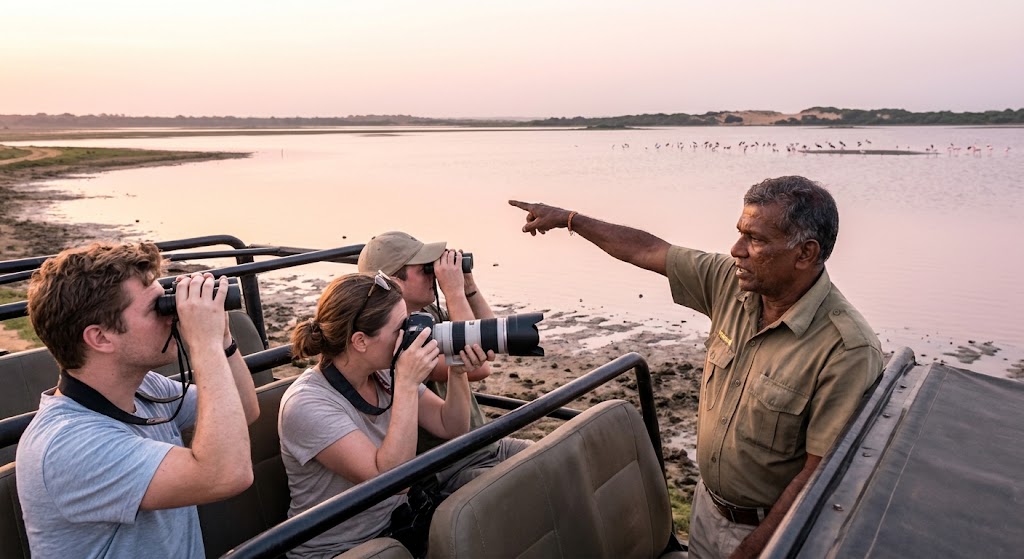
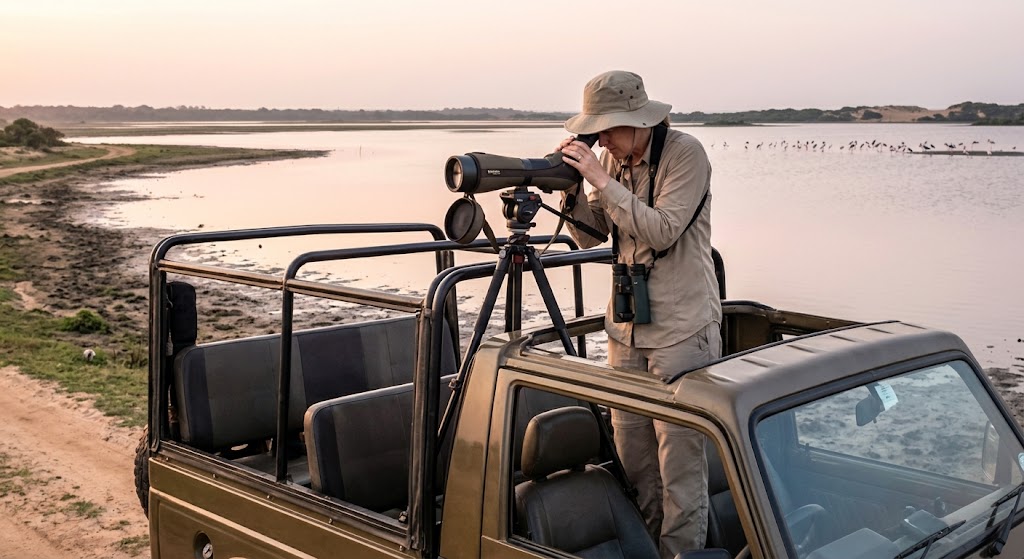
Binoculars matter more here than at most Sri Lankan parks, given how much of the activity happens at a distance across open water and mudflats. A spotting scope is worth considering if you’re serious about picking out individual waders in mixed flocks.
Neutral clothing, sun protection, and a hat are essential, since Bundala’s open terrain offers little shade during a morning drive. A local guide familiar with current water levels and recent sightings will get you to active feeding areas faster than exploring alone.
Bundala rewards visitors who plan around the September to March migration and come specifically for the birdlife. Building a birding trip into your Sri Lanka itinerary? MaRadha Colombo can help time it around the season.