Hot Air Ballooning in Dambulla - Complete Visitor's Guide
Hot air ballooning in Dambulla offers a unique way to explore Sri Lanka’s Cultural Triangle from above. Flights begin before sunrise, with breathtaking views of ancient temples, forests, and lakes, while weather conditions determine each day’s journey.
The Pre-Dawn Pickup and Launch Site
Pickup happens early, usually between 4:45 and 6:00 Am, from hotels in Habarana, Sigiriya, Dambulla, or Kandalama. You won’t get much warning the night before beyond a rough time window, since the exact slot depends on where you’re staying relative to the launch field.
The default launch site sits near Kandalama, but pilots move it depending on wind direction and speed that morning. Don’t be surprised if your driver takes a different route than the one described in your booking confirmation, it’s normal, and it’s the pilot’s call, not an error.
What Happens Before a Hot Air Balloon Takes Off
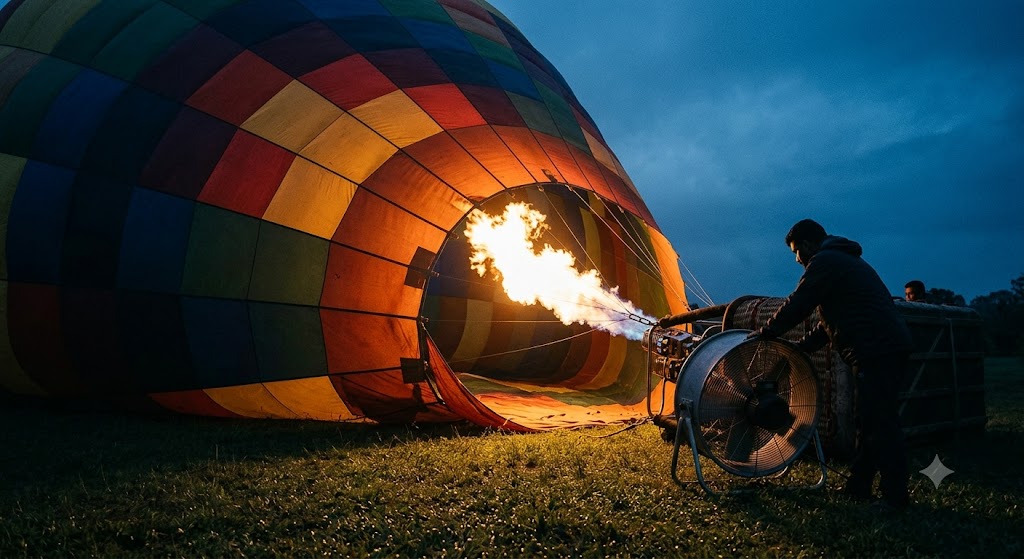
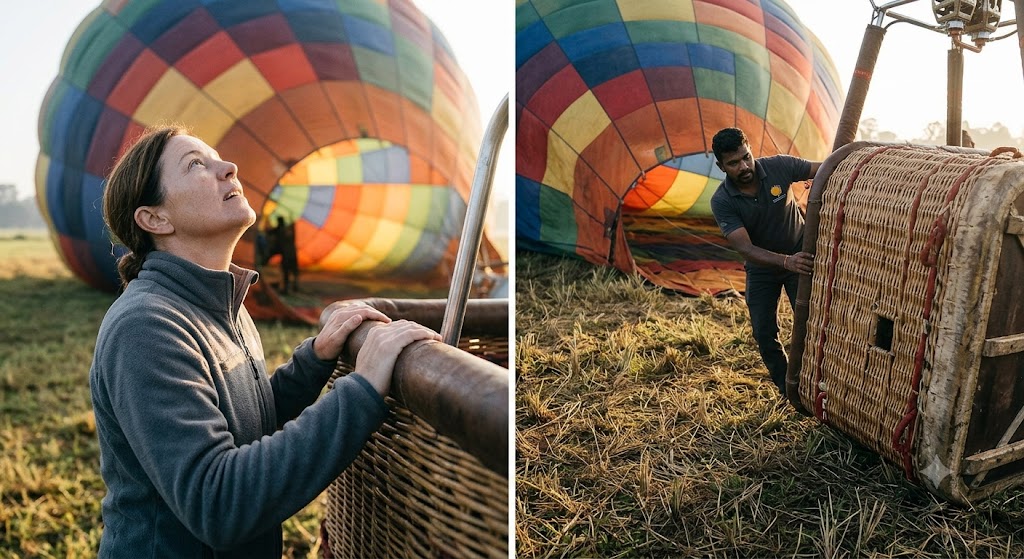
Before you fly, there’s a stretch of standing around watching the envelope go from a flat sheet on the ground to a fully upright balloon. Ground crew hold the mouth open while a fan pushes cold air in first, then the burners take over and heat it until the balloon stands on its own.
This part takes a while and it’s worth paying attention to, most people find it more interesting than expected, and it’s your best chance for photos of the balloon at full size before the basket lifts off the ground.
What to Expect During a Hot Air Balloon Ride in Dambulla
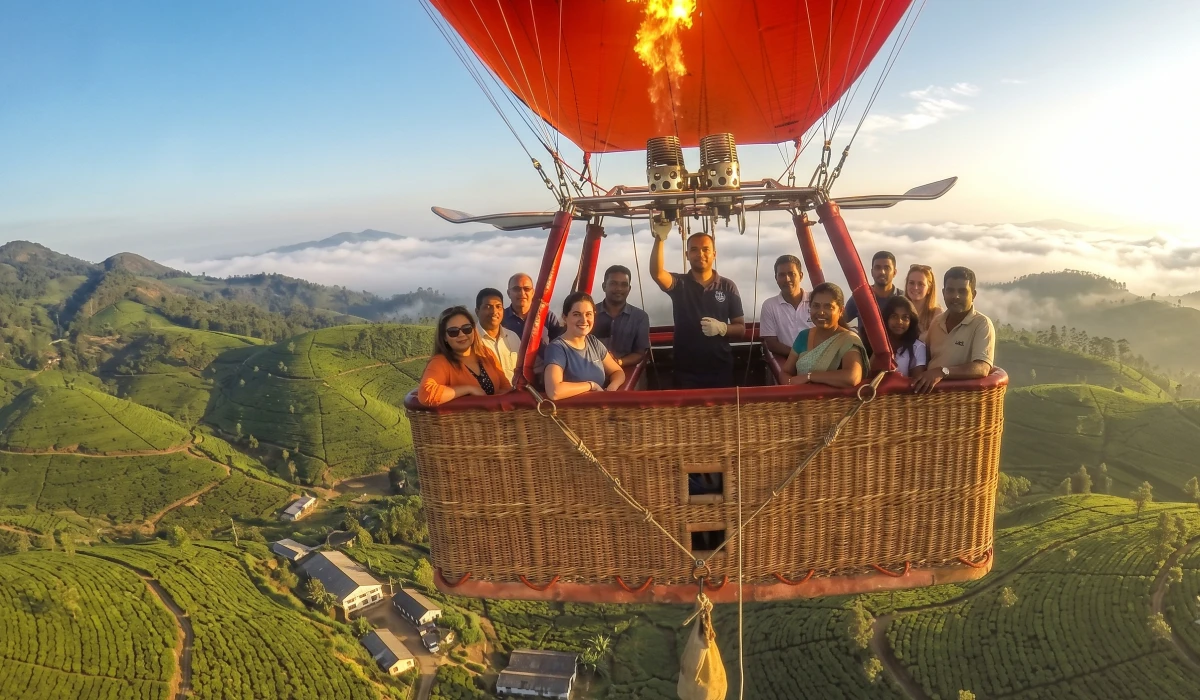
Lift-off is quieter than people expect. There’s no engine, no jolt, just the burner’s whoosh and a slow rise that’s easy to miss if you’re looking at your phone instead of the ground. Passengers usually stand in a basket holding 12 to 16 people, split into small compartments.
Within the first minute or two you’re already above tree height, and the ground starts moving away at whatever pace the wind sets that morning, sometimes barely noticeable, sometimes faster than you’d guess from watching balloons from below.
Essential Tips for a Comfortable Balloon Ride in Dambulla
Mornings in the Cultural Triangle are cool before sunrise, so a light jacket helps for the first half hour, even though it warms up fast once the sun’s up. Closed shoes are more practical than sandals for standing in the basket and walking across the landing field afterward.
Cameras and phones are welcome on board, and most flights build in time during the inflation stage for photos before things get busy. Large bags aren’t allowed in the basket, so keep what you’re carrying to the essentials,, anything else can usually stay in the pickup vehicle.
What You Can See While Hot Air Ballooning in Dambulla
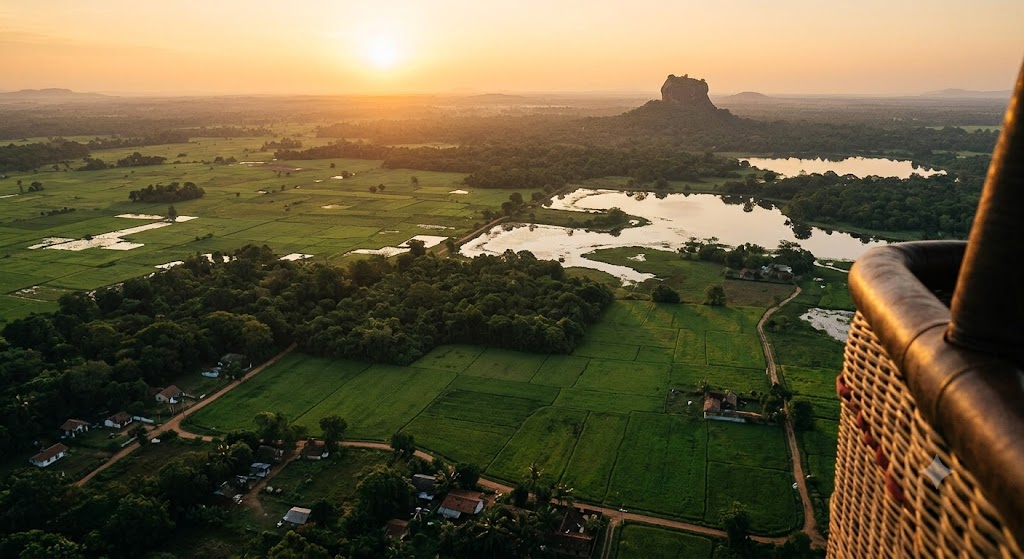
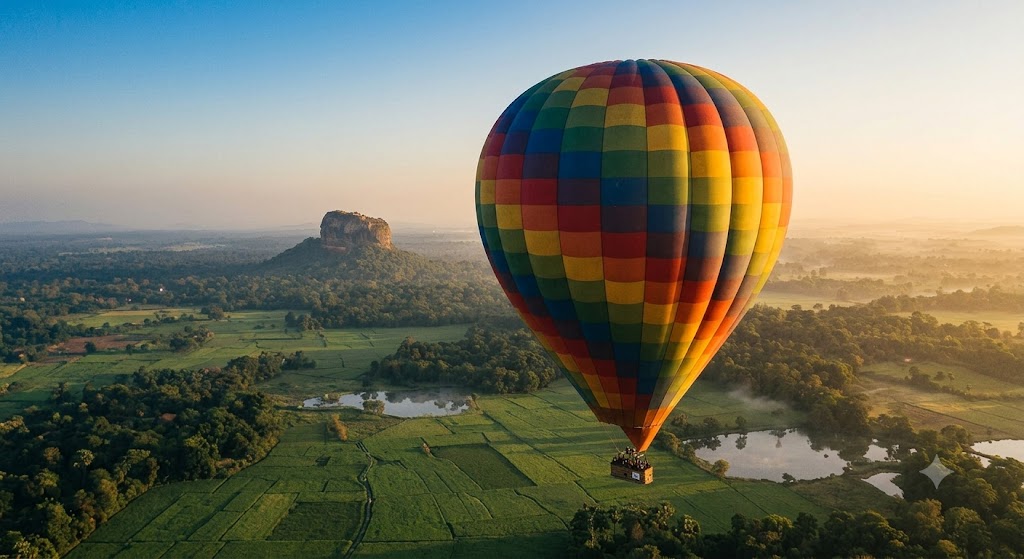
Flight paths aren’t fixed, so what you see depends on which way the wind blows that day. Most flights pass over some mix of paddy fields, forest, and lakes, with the Dambulla cave temple and Sigiriya rock visible from a distance on clear mornings.
Wildlife sightings are common but not guaranteed; elephants in open fields, water buffalo in the paddies, and birds moving below or alongside the balloon. Villages start their day beneath you, and it’s common for people on the ground to wave as the balloon passes over.
How High and How Long Does a Dambulla Balloon Ride Last?
Balloons here typically fly between 500 and 2,500 feet, adjusting height depending on the terrain and what the pilot wants you to see. The flight itself runs close to an hour, though the full outing, from hotel pickup to drop-off. The whole trip takes three to four hours.
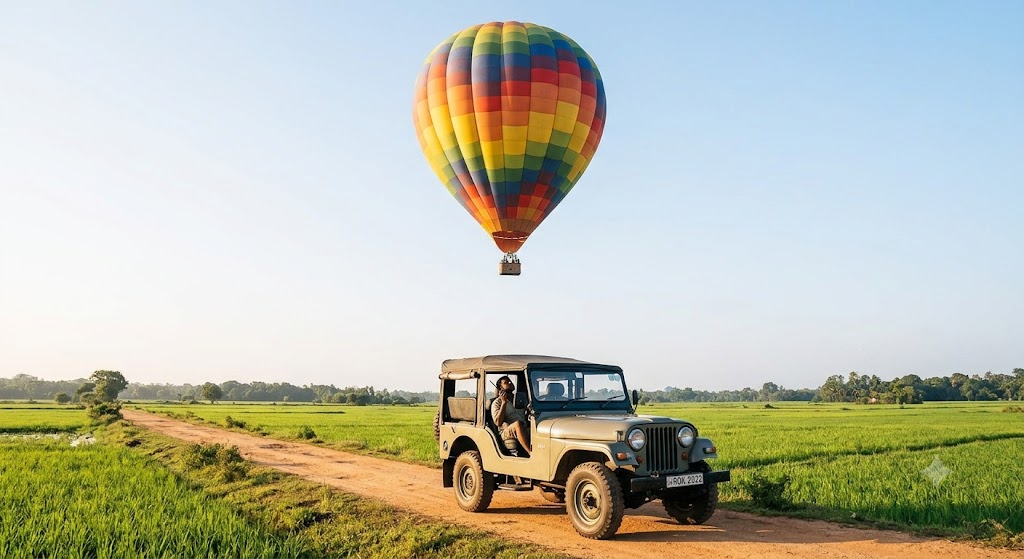
Landing spots aren’t planned in advance. Pilots aim for open ground, which might be a large field or, occasionally, someone’s front yard. A ground crew tracks the balloon by vehicle and meets you at the landing site, often with a toast to close out the flight.
Best Time for Hot Air Ballooning in Dambulla
Flights generally run from November through April, when winds over the Cultural Triangle are calmest. December and January tend to be the busiest months, so book ahead if you’re set on those dates.
Every flight is weather-dependent, and pilots make the call on the morning itself, not the night before. If conditions aren’t safe, operators typically offer a full refund or a spot on the next available flight, so it’s worth building a buffer day into your itinerary in case the first attempt gets cancelled.
How Much Does Hot Air Ballooning in Dambulla Cost?
ricing varies by operator and season, generally landing somewhere between 150 and 300 US dollars per person, with breakfast and hotel transfers usually included. Rates shift with demand, so it’s worth checking current pricing directly with the operator rather than relying on older listings.
Most operators set a minimum age of seven, and teenagers under sixteen need to fly with an adult. Pregnant travellers usually aren’t permitted to book, and this isn’t optional, it comes down to insurance and safety requirements rather than operator preference.
How Safe Is Hot Air Ballooning in Dambulla?
Sri Lanka’s balloon operators are licensed under the Civil Aviation Authority, with balloons carrying dedicated registration numbers and yearly airworthiness inspections. Pilots hold commercial licenses through the same authority, and the final decision on whether a flight goes ahead sits with the pilot, not the booking office.
If you’re deciding between operators, ask how long they’ve been flying in Sri Lanka and whether their balloons and pilots are currently registered with the CAA-SL, it’s a fair question, and any operator worth booking will have a straightforward answer.
Hot air ballooning over Dambulla is weather-dependent and worth building flexibility into your trip for. If you’re staying near the Cultural Triangle, ask MaRadha Colombo about pairing a sunrise flight with the rest of your itinerary.