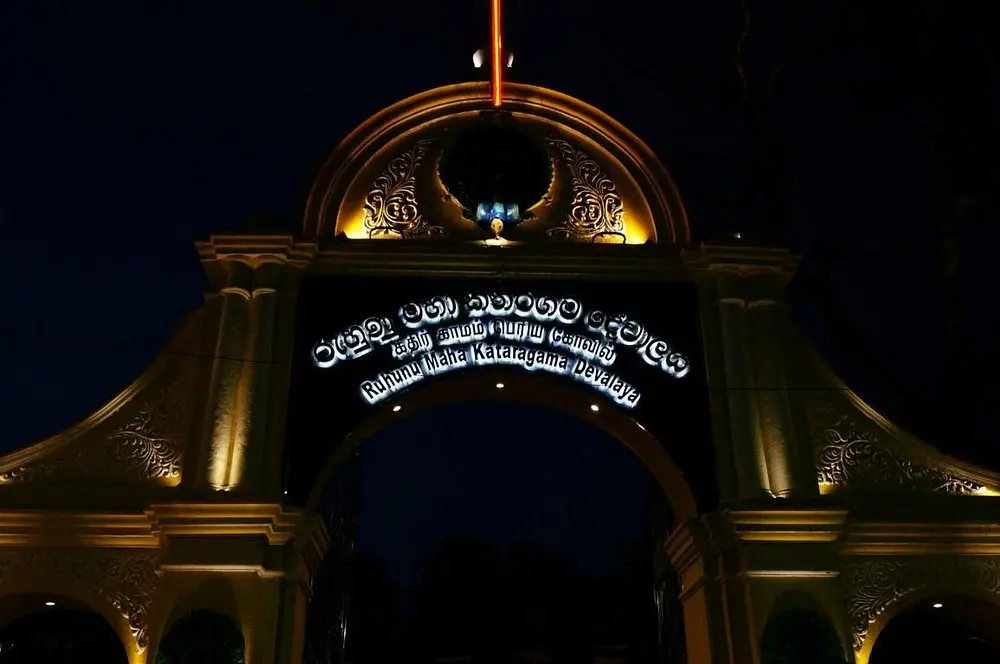
Uva Province · Kataragama
Kataragama Temple is one of the most visited religious sites in Sri Lanka, known for its multi-faith significance and long history of pilgrimage. The temple complex is dedicated to the deity Kataragama and has been an active place of worship for centuries, with origins tracing back to ancient times before formal temple structures were established.
What makes Kataragama unique is its shared religious importance. Buddhists, Hindus, Muslims, and indigenous Vedda communities all visit this site, each connecting to the deity in different ways. This has shaped Kataragama into a rare spiritual center where multiple traditions exist side by side rather than separately.
The main shrine is relatively simple compared to large temple complexes elsewhere. It features a modest structure where daily rituals take place, often accompanied by drumming and traditional offerings.
One of the most important events here is the annual Kataragama Festival, usually held between July and August. During this period, the town becomes a major pilgrimage hub, with thousands of devotees taking part in processions, religious ceremonies, and traditional acts of devotion. Some pilgrims travel long distances on foot to reach the temple, following routes that have been used for generations.
The temple is located near the Menik Ganga (river), where many visitors perform ritual bathing before entering the shrine area. The surrounding region includes forested land and is close to wildlife reserves, adding a natural setting to the experience.
Key things to know:
- Active pilgrimage site for multiple religions
- Annual festival held July – August
- Ritual bathing at Menik Ganga is common
- Dress modestly when visiting
- Can be crowded during peak pilgrimage periods
Kataragama Temple is less about structure and more about tradition. It offers a direct look at how religion, culture, and community come together in Sri Lanka, making it one of the most distinctive spiritual destinations in the country.