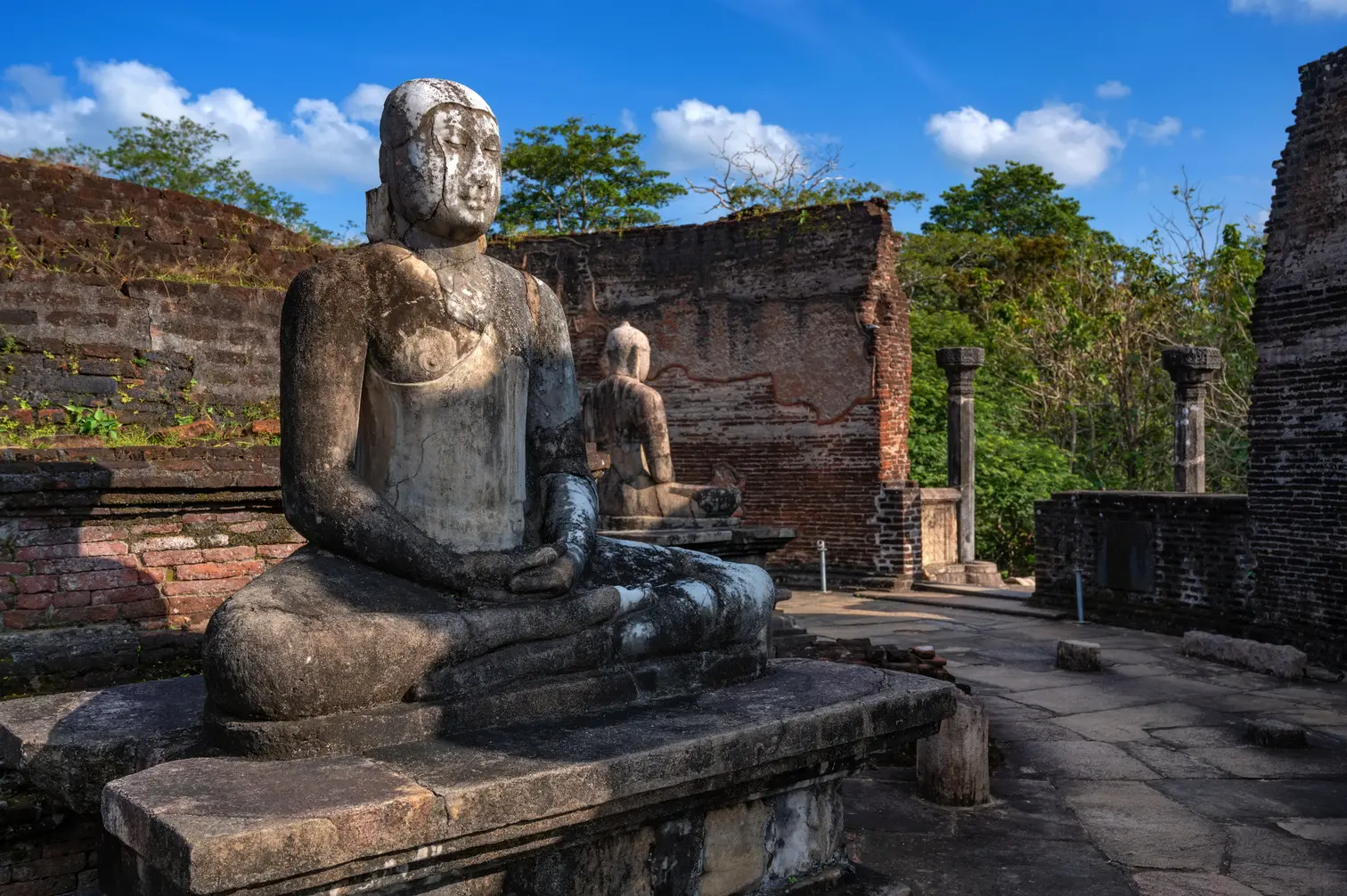
North Central Province · Polonnaruwa
Polonnaruwa Ancient City is one of Sri Lanka’s best-preserved historical capitals, established as a royal city in the 11th century CE after the decline of Anuradhapura. It became a major center of administration, religion, and irrigation under rulers such as King Vijayabahu I and King Parakramabahu I.
What makes Polonnaruwa stand out is how organized and advanced the city was. The ruins are spread across a large, flat area, but the layout is structured, royal palaces, temples, monasteries, and reservoirs are clearly defined and easy to navigate. Many of the brick and stone structures remain in strong condition, giving a clear idea of how the city once functioned.
One of the most important sites is the Royal Palace complex of King Parakramabahu I, originally a multi-story structure built in the 12th century. Nearby is the audience hall, where carved stone elephants and detailed pillars still stand. These structures show the scale and planning that went into royal architecture during this period.
Another major highlight is the Gal Vihara, a rock temple featuring four large Buddha statues carved directly into granite. Dating back to the 12th century, these sculptures are known for their precision and detail, especially the reclining Buddha figure, which is over 14 meters long.
Water management was a key part of Polonnaruwa’s success. The massive Parakrama Samudra, a man-made reservoir built during the same era, still exists today. It supplied water for agriculture and daily use, showing the engineering knowledge of the time.
Key things to know:
- Established as a capital in the 11th century CE
- Best explored by bicycle or tuk-tuk
- Allow at least half a day to cover main sites
- Visit early morning or late afternoon to avoid heat
- Dress modestly when entering religious areas
Polonnaruwa Ancient City offers a clear and detailed look at medieval Sri Lanka. It’s not just a collection of ruins; it’s a well-planned city that still shows how people lived, built, and managed resources nearly a thousand years ago.