Southern Province · Hambantota · 1993
Bundala National Park is one of Sri Lanka’s most important wetland ecosystems and a designated UNESCO Biosphere Reserve. Located along the southern coast near Hambantota, the park was officially declared a national park in 1993 to protect its rich biodiversity, especially its birdlife.
Bundala is best known for birdwatching. It is a key stopover point for migratory birds traveling along the Central Asian Flyway. During peak migration season (usually between November and March), the park becomes home to thousands of birds, including the Greater Flamingo, which gather in large flocks in the lagoons. Other commonly spotted species include pelicans, painted storks, and various types of herons and egrets.
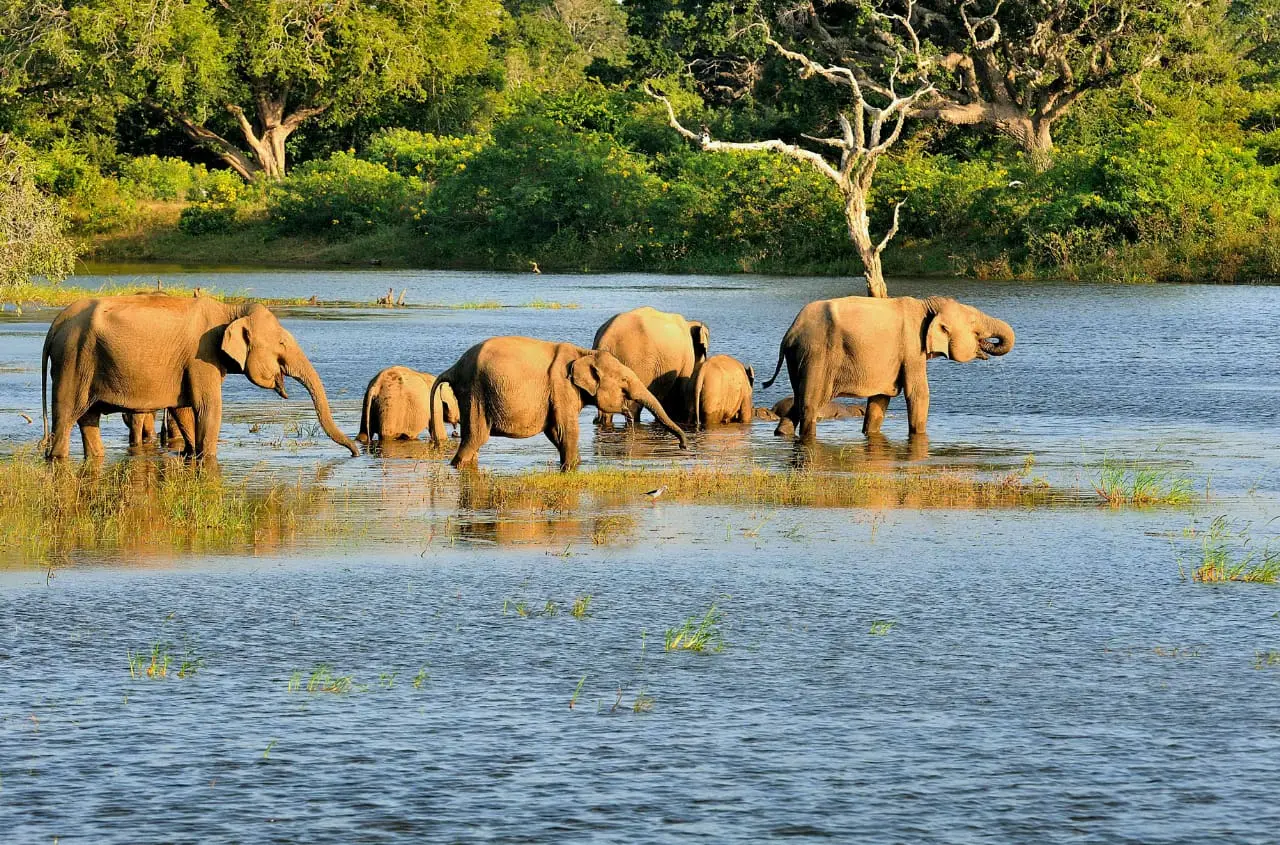
The park’s landscape is made up of lagoons, salt pans, sand dunes, and scrub forest. This mix of habitats supports a wide range of wildlife beyond birds. Visitors may also see Asian Elephants, Saltwater Crocodile, and Spotted Deer. The lagoons are especially active areas, attracting both resident and migratory species.
Key highlights of Bundala National Park include:
- Large flocks of migratory birds, especially flamingos during peak season
- A network of lagoons that create ideal feeding and nesting grounds
- Diverse wildlife including elephants, crocodiles, and deer
- Less crowded safari experience compared to more popular parks
Safaris in Bundala are typically done by jeep, with guided tours helping visitors navigate the different zones of the park. The terrain is relatively flat, making it easier to cover multiple habitats within a short time.
Bundala National Park is about a 4 to 5-hour drive from Colombo and is often visited along with nearby attractions in the southern region. The best time to visit is early morning or late afternoon when wildlife activity is highest and temperatures are lower.
Bundala stands out for its ecological importance and peaceful setting, offering a more relaxed and nature-focused safari experience in Sri Lanka.