
The Udawalawe Elephant Transit Home is a leading elephant rehabilitation centre in Sri Lanka, caring for orphaned elephants before their return to the wild. Learn how the centre works, its conservation efforts, and what visitors can expect when they visit.
The Sri Lankan Department of Wildlife Conservation established the facility in 1995, known locally as Ath Athuru Sevana, specifically to rehabilitate orphaned elephant calves rather than keep them in permanent captivity. Most arrive after losing their mothers to poaching, land mines left from the civil war, or the broader conflict between elephants and expanding farmland across the island.
The centre sits inside Udawalawe National Park itself, a deliberate choice that keeps young elephants close to the terrain and climate they’ll eventually be released into, rather than raising them somewhere unfamiliar and relocating them later. That proximity also means staff can monitor released elephants without having to transport them across long distances first.
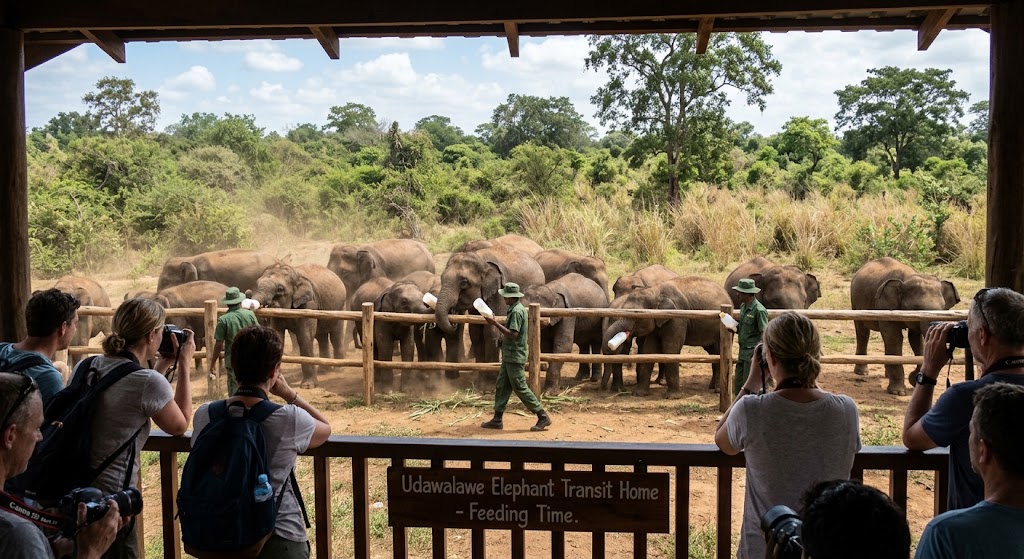
Calves are bottle-fed a milk formula on a strict schedule, roughly every three hours, mimicking natural feeding patterns as closely as possible. Some elephants need alternatives like soy milk or a supplement called jeevani if they show signs of lactose sensitivity, which isn’t uncommon.
Caretakers deliberately limit human bonding and instead encourage calves to form relationships with each other, since a young elephant that’s too attached to people has a harder time reintegrating with a wild herd later. There are no chains overnight, unlike some other elephant facilities in Sri Lanka, and no rides, baths, or performances offered to visitors, the entire approach is built around minimising human influence on how these animals grow up.
Elephants generally stay at the transit home until around five years old, when they’re strong and socially prepared enough to survive independently. Release happens in small groups rather than individually, since elephants that have bonded during rehabilitation tend to do better navigating the wild together.
Once released into Udawalawe National Park, some tracked elephants are fitted with collars for a period to monitor their progress, and park staff keep a general watch on newly released groups as they adjust. The goal from here is full independence, successful cases eventually join or shadow an existing wild herd.
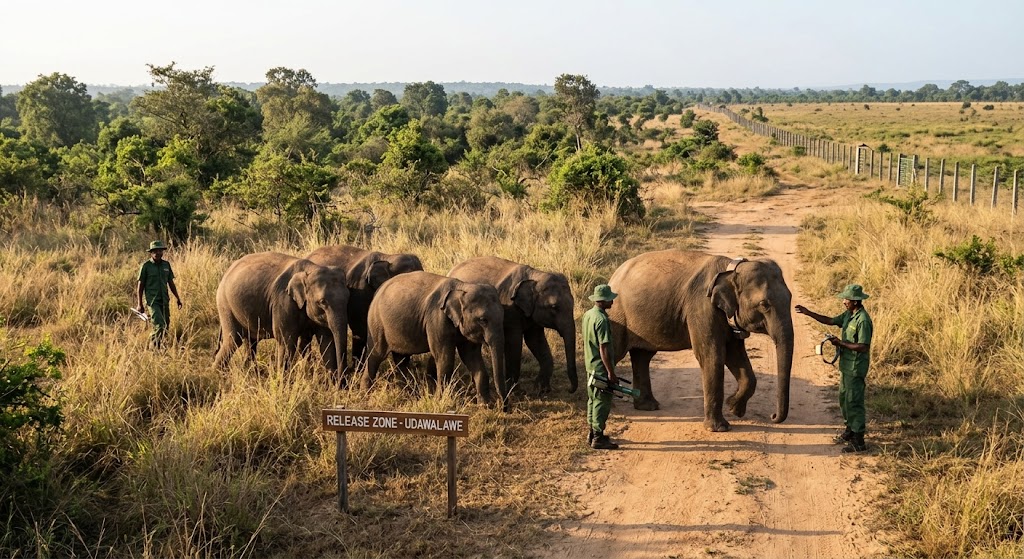
Reported figures vary by source and by year, but consistently sit above 100 elephants successfully rehabilitated and released since the programme began, with some more recent counts putting the total closer to 200. Survival rates after release are described as strong, based on tracking data from collared animals.
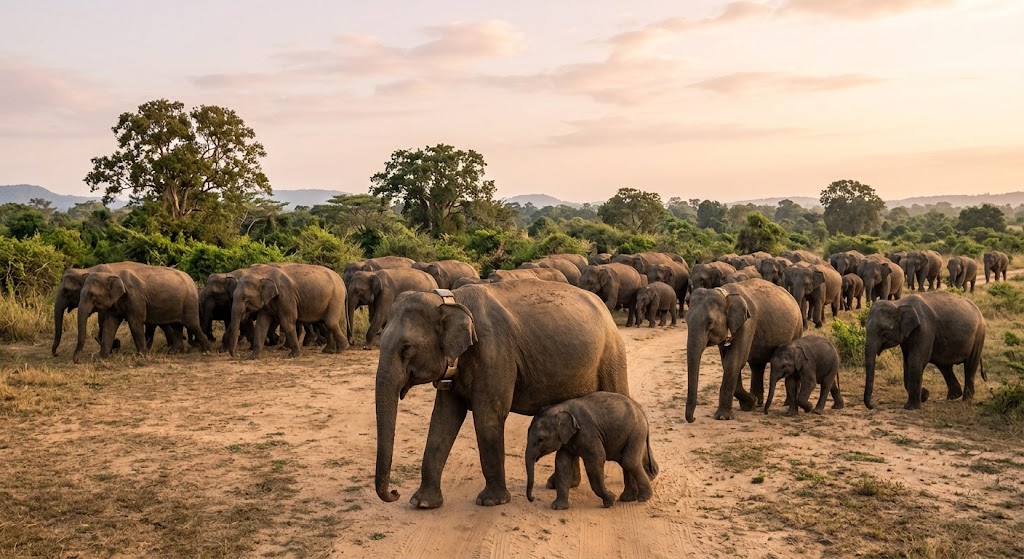
More than ten released females have gone on to become mothers themselves in the wild, producing calves born entirely outside captivity. That’s the kind of outcome the whole programme is built around, not just survival, but genuine reintegration into a functioning wild population.
Visitors watch from a designated viewing platform at feeding times, generally scheduled several times a day, rather than getting close-up or hands-on access to the elephants. That distance is intentional, the facility prioritises the animals’ eventual return to the wild over a more interactive tourist experience.
The centre sits close to Udawalawe National Park’s entrance, making it an easy add-on to a jeep safari rather than a separate trip. Arriving slightly before a scheduled feeding time is worth it, since watching the calves gather and move toward the viewing area is part of the experience.
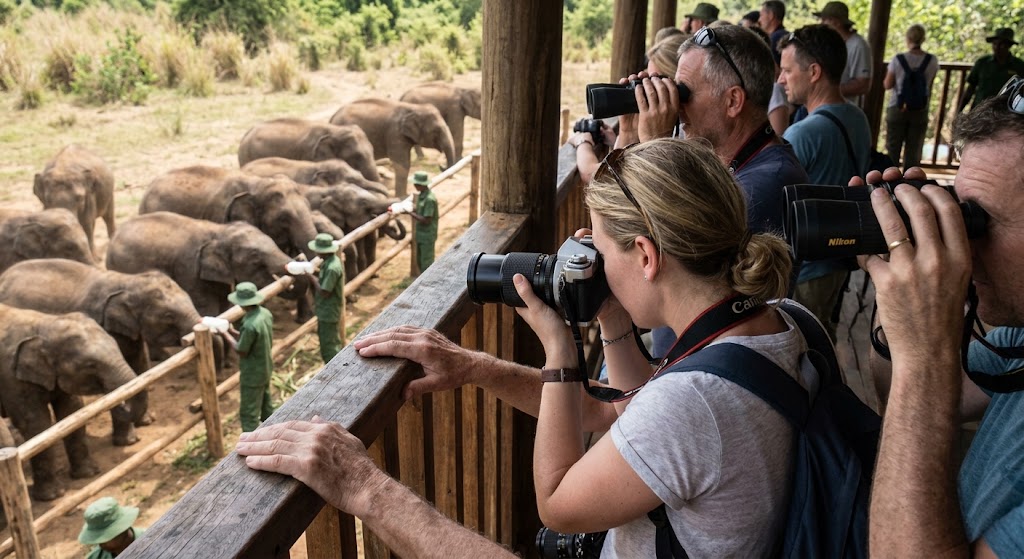
Unlike some elephant tourism operations elsewhere in Sri Lanka and the region, the transit home doesn’t offer riding, bathing sessions, or any staged interaction between visitors and elephants. It functions closer to a genuine wildlife rehabilitation centre than a tourist attraction built around elephants.
Some visitors have noted staff occasionally using sticks during feeding, which can look harsh without context; young elephants are large, food-motivated, and unpredictable at close range, and handling reflects managing that behaviour safely rather than mistreatment.
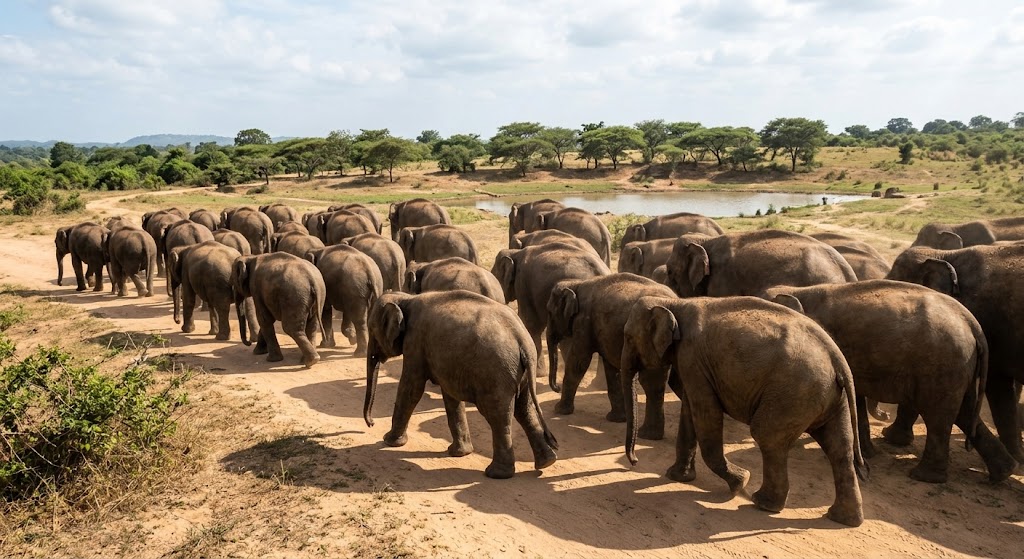
Feeding sessions run several times a day, and each one draws calves down from wherever they’ve been resting or exploring toward the viewing area, often crossing water or open ground as a group. Watching that movement happen is arguably more interesting than the feeding itself.
Sessions run efficiently, since dozens of calves need feeding within a limited window, so caretakers move quickly and with practised routine. It’s worth arriving a little early to get a clear view before the crowd around the platform builds.
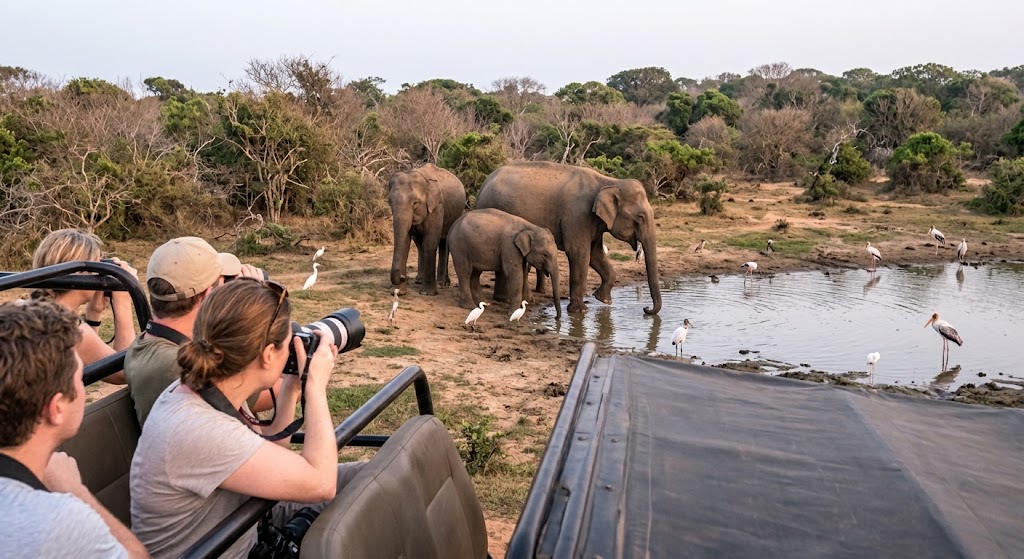
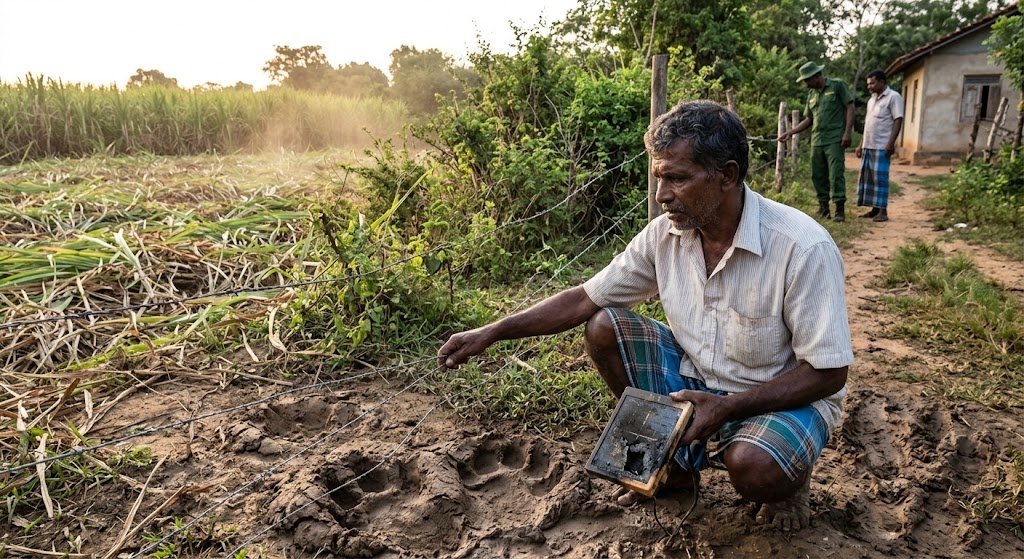
Human-elephant conflict remains the primary driver behind new arrivals, as farmland and settlements continue expanding into elephant habitat across Sri Lanka. That means the transit home’s work isn’t winding down, new orphaned calves keep arriving even as the programme’s release numbers grow.
Funding and ongoing support from conservation partners factor into how consistently the programme can operate, and entrance fees from visitors contribute directly to that funding rather than going toward unrelated tourism infrastructure.
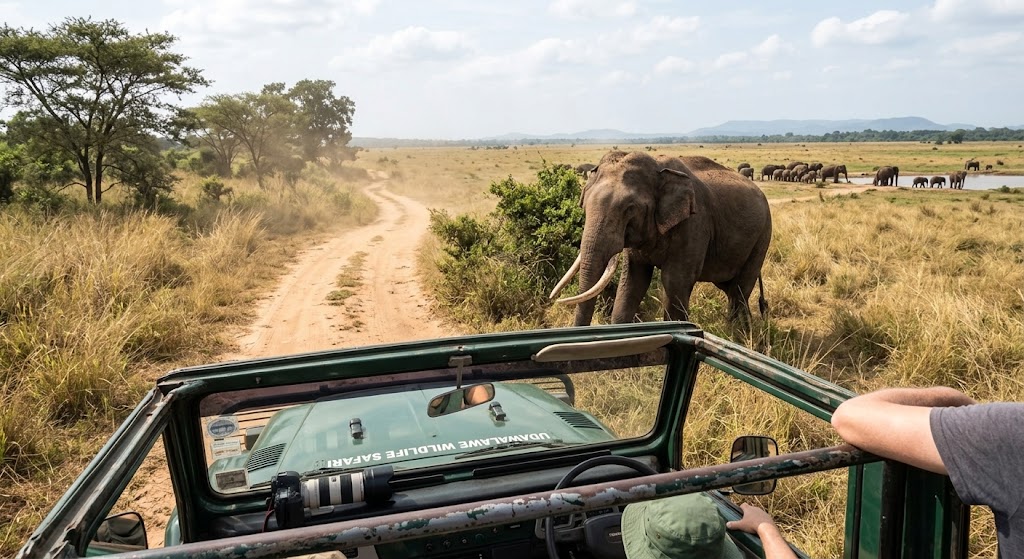
Most visitors pair a Transit Home stop with a jeep safari through Udawalawe National Park itself, where elephant density is among the highest in Sri Lanka and sightings of wild herds are close to guaranteed. It’s a natural pairing, since the two experiences show opposite ends of the same story; orphaned calves being raised, and wild elephants living freely nearby.
Udawalawe sits roughly three and a half hours from Colombo, making it a common stop on southern circuit itineraries alongside Yala or the south coast beaches.
The Elephant Transit Home shows what patient, low-interference rehabilitation can achieve for a species under real pressure. Planning a visit as part of your Sri Lanka trip? MaRadha Colombo can help you build it into your itinerary.

Enjoy 15% OFF when you book today with promo code maradha0345, plus exclusive perks: