"
Skip to contentKosgoda Turtle Hatchery offers visitors a chance to learn about Sri Lanka’s sea turtle conservation efforts while supporting local wildlife protection. Discover how hatcheries operate, what responsible turtle tourism looks like, and how you can make a positive impact during your visit.
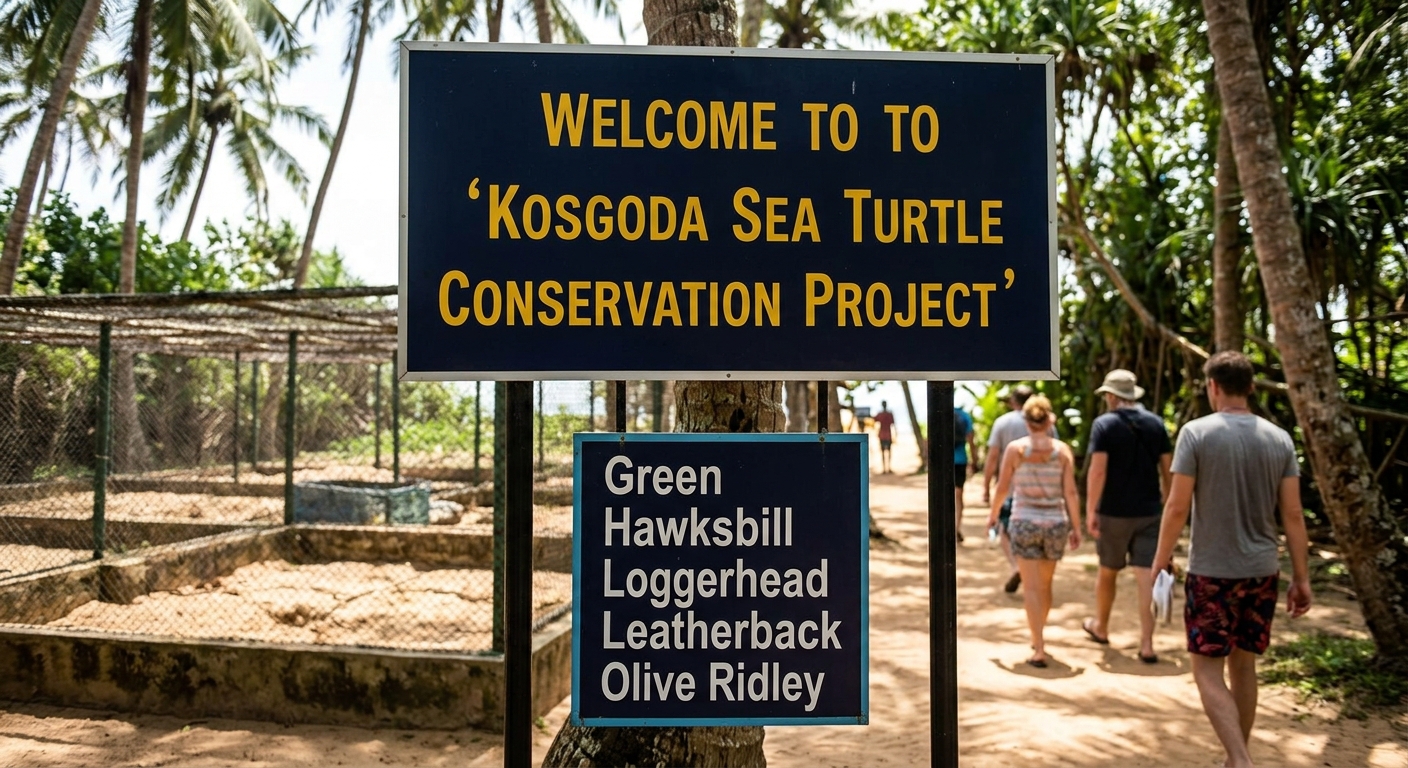
Kosgoda sits on the A2 coastal road between Bentota and Hikkaduwa, on a stretch of beach that’s long been a nesting site for five of the world’s seven sea turtle species; green, hawksbill, loggerhead, leatherback, and olive ridley. Females come ashore at night to lay eggs in the sand.
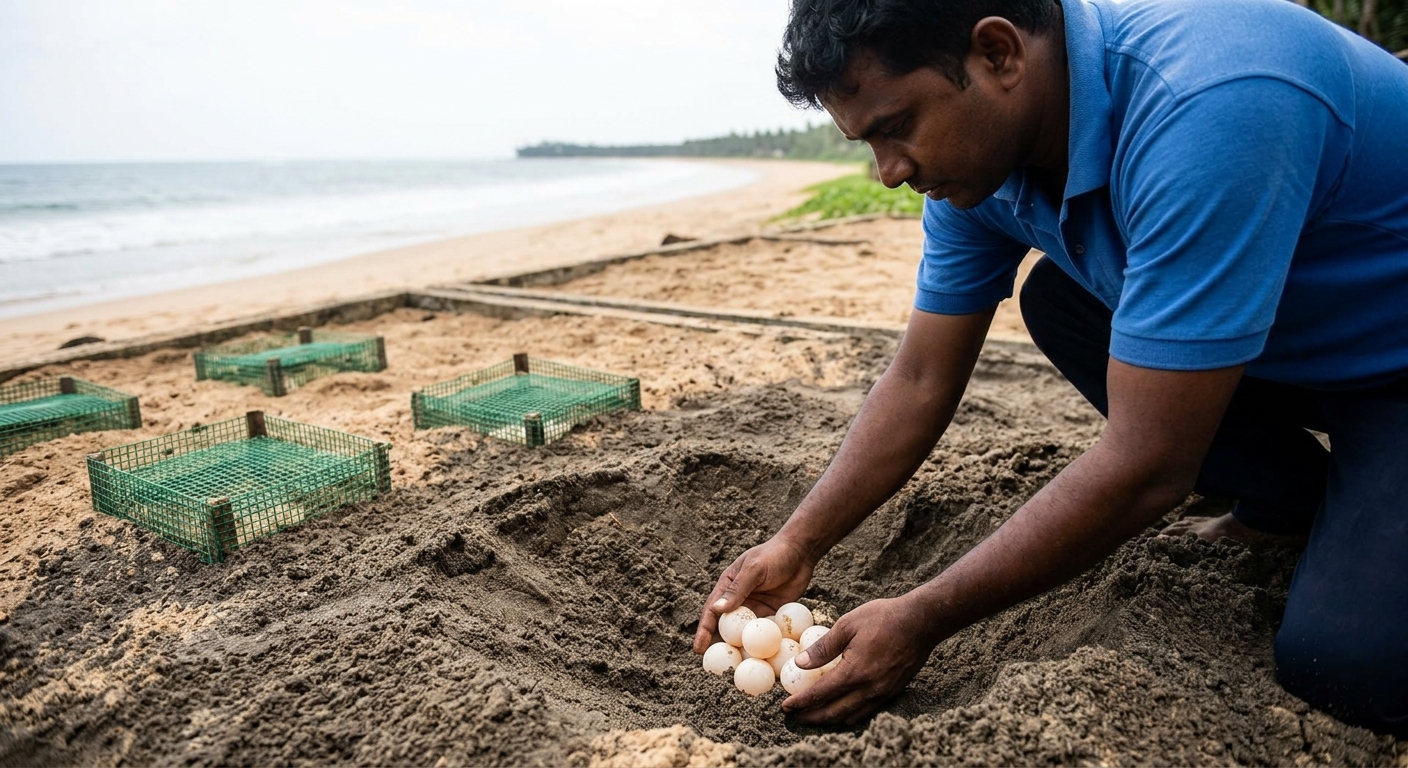
Egg poaching and predation from dogs and monitor lizards pushed local conservationists to start collecting eggs for protected incubation decades ago, which is how the area’s hatchery cluster began. The basic model still holds: eggs are moved to guarded sand pits, incubated, and hatchlings released into the sea days later, with the whole system built around beating the odds nature alone couldn’t offer once human pressure on nesting beaches increased.

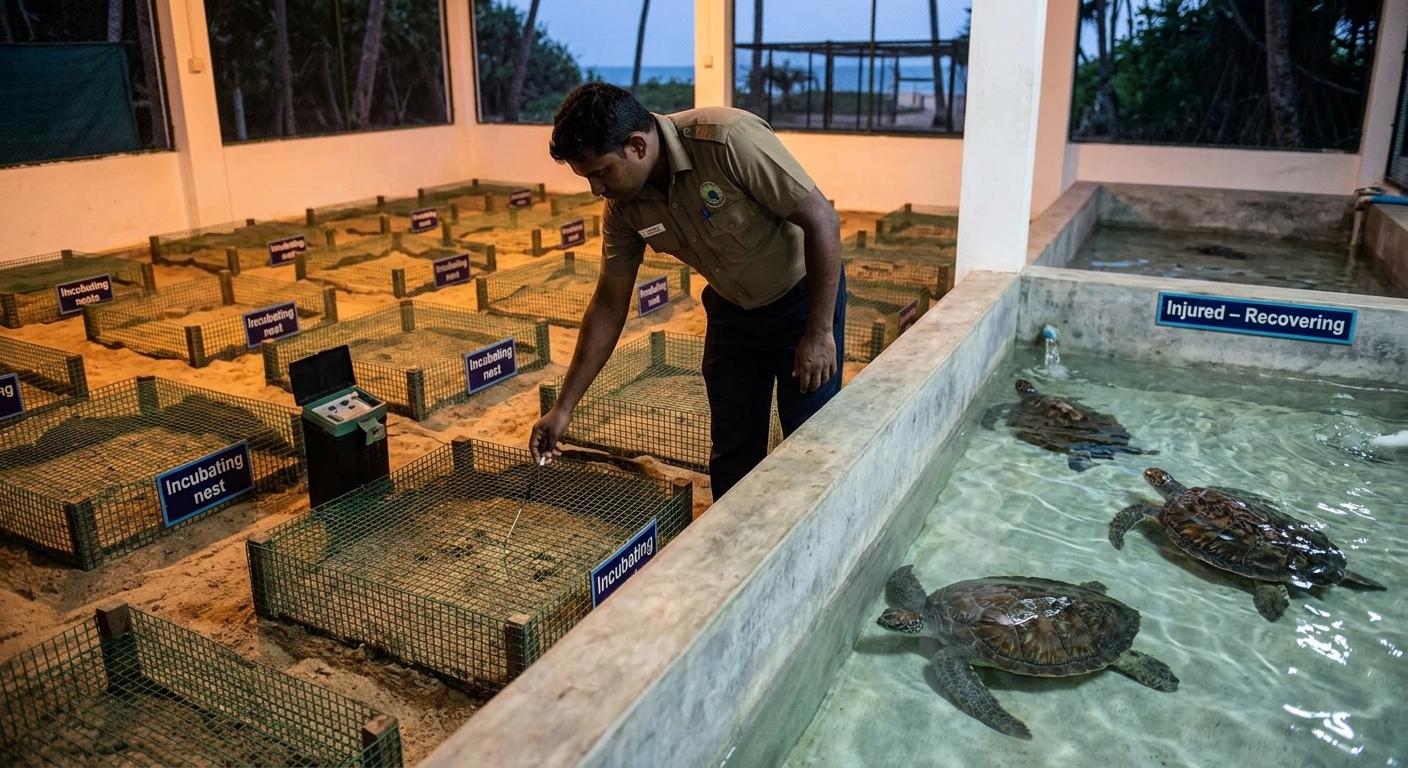
The better-run operations pay fishermen a fixed rate for eggs they’d otherwise sell for consumption, removing the financial incentive to poach nests. Eggs go into monitored sand enclosures that mimic natural incubation conditions as closely as possible, rather than tanks or artificial heating.
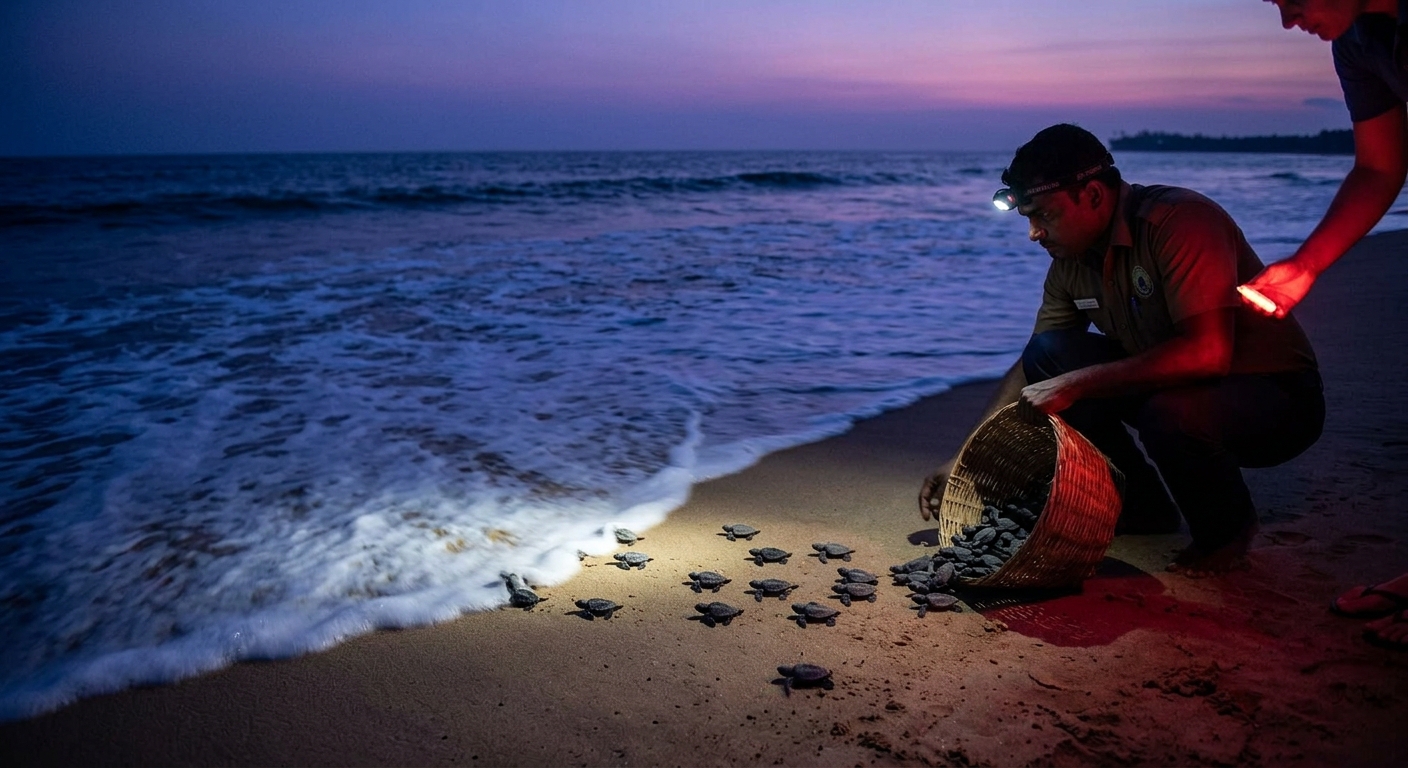
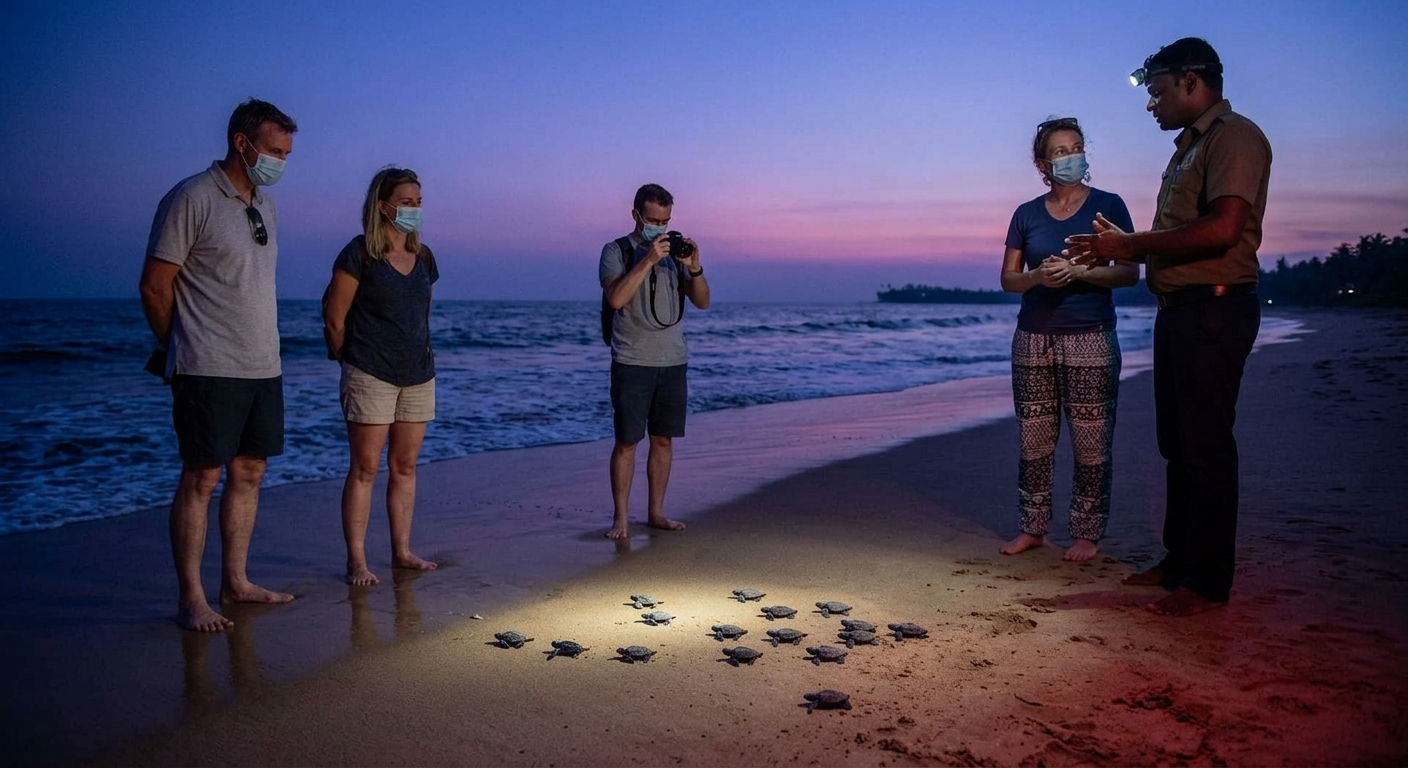
Hatchlings are released within a day or two of hatching, always after dark or close to it, which matches how turtles navigate naturally toward the ocean using light and wave direction. Any turtles kept longer term are usually injured animals unable to survive release, not healthy hatchlings held for show, and a legitimate operation will explain exactly why each resident turtle is there rather than leaving it unaddressed.
Some Kosgoda operations hold hatchlings in tanks for several days purely to guarantee a release for arriving tour groups, regardless of the time of day. Daytime releases are a clear warning sign, hatchlings navigate partly by light and wave patterns, and a midday release disorients them before they’ve even reached the water.
Letting tourists hold or handle hatchlings for photos is another red flag; it’s physical stress on an animal with a fragile shell days old, and it offers nothing to the turtle’s survival odds. If a hatchery advertises guaranteed daytime releases or handling opportunities, treat that as marketing aimed at tourists rather than a conservation practice, since neither serves the animal’s actual interests.
The Kosgoda Sea Turtle Conservation Project, running since 1988 as one of the country’s earliest such efforts, and the Victor Hasselblad Turtle Hatchery are generally cited as the more responsible operations on this stretch of coast, with documented release practices and IUCN-affiliated conservation work.
That said, standards can shift over time even at established projects, so it’s worth checking recent visitor reports before booking rather than relying on reputation alone. A hatchery that was well-run five years ago isn’t automatically still that way today.
Nesting and hatching happen year-round on this stretch of coast, though numbers tend to peak between roughly March and July. Evening is the best window for arriving at a hatchery, since that’s when legitimate releases actually happen rather than being staged for daytime foot traffic.
If a hatchery tells you a release is scheduled for the following morning or afternoon rather than after dark, that’s worth treating as a signal to look elsewhere rather than adjusting your own schedule to fit theirs.
Book ahead where possible rather than turning up expecting an immediate release, since that pressure is exactly what pushes some hatcheries toward daytime releases for convenience. A responsible visit sometimes means waiting until evening, or coming back the next day.
Skip any photo opportunity that involves handling a hatchling, and ask your guide questions rather than assuming a hatchery is legitimate because it’s popular or well-signposted from the road. Popularity and ethical practice aren’t the same thing on this stretch of coast.
Choosing the right hatchery in Kosgoda makes a real difference to how much your visit actually helps. MaRadha Colombo can point you toward the operations with the strongest track record on your south coast trip.
Enjoy 15% OFF when you book today with promo code maradha0345, plus exclusive perks: