
The Kandy Esala Perahera brings ten nights of drumming, fire, and decorated elephants through Kandy each August, honouring the Sacred Tooth Relic of the Buddha. Here’s what to expect. See Sri Dalada Maligawa’s official site for confirmed dates.
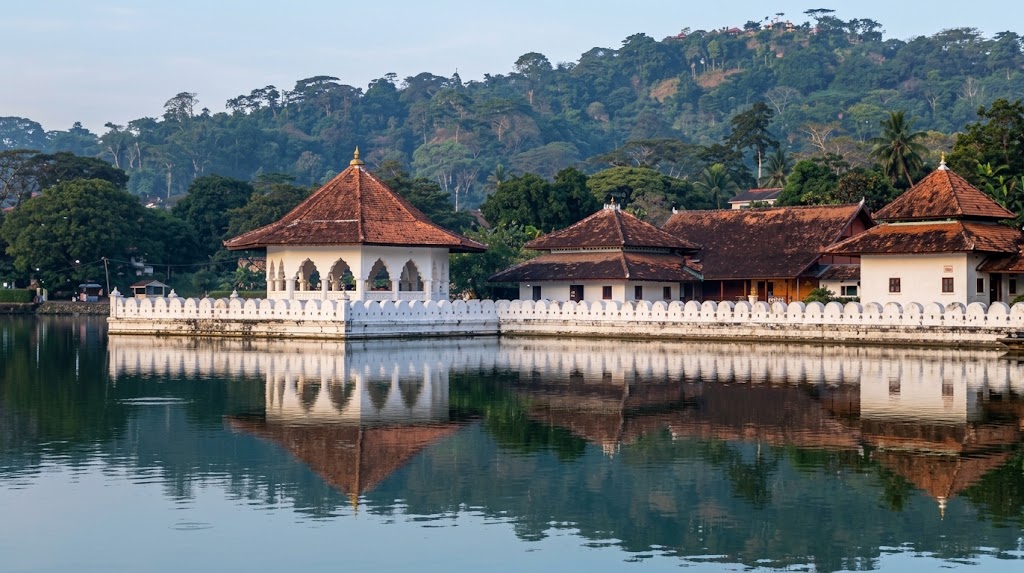
The procession exists to honour the Sacred Tooth Relic, believed to be a tooth of the Buddha himself, brought to Sri Lanka in 310 AD by Princess Hemamala and Prince Dantha of the Kalinga kingdom. It’s now enshrined at Sri Dalada Maligawa, the Temple of the Sacred Tooth Relic, in the heart of Kandy, where daily rituals continue alongside the annual festival cycle.
The relic is considered so significant that historically, whoever held custody of it was seen as holding the right to rule the island. That belief explains why the annual procession carries the weight it does; this isn’t simply a cultural parade, but an act of devotion tied directly to Sri Lanka’s political and spiritual history stretching back over a thousand years.
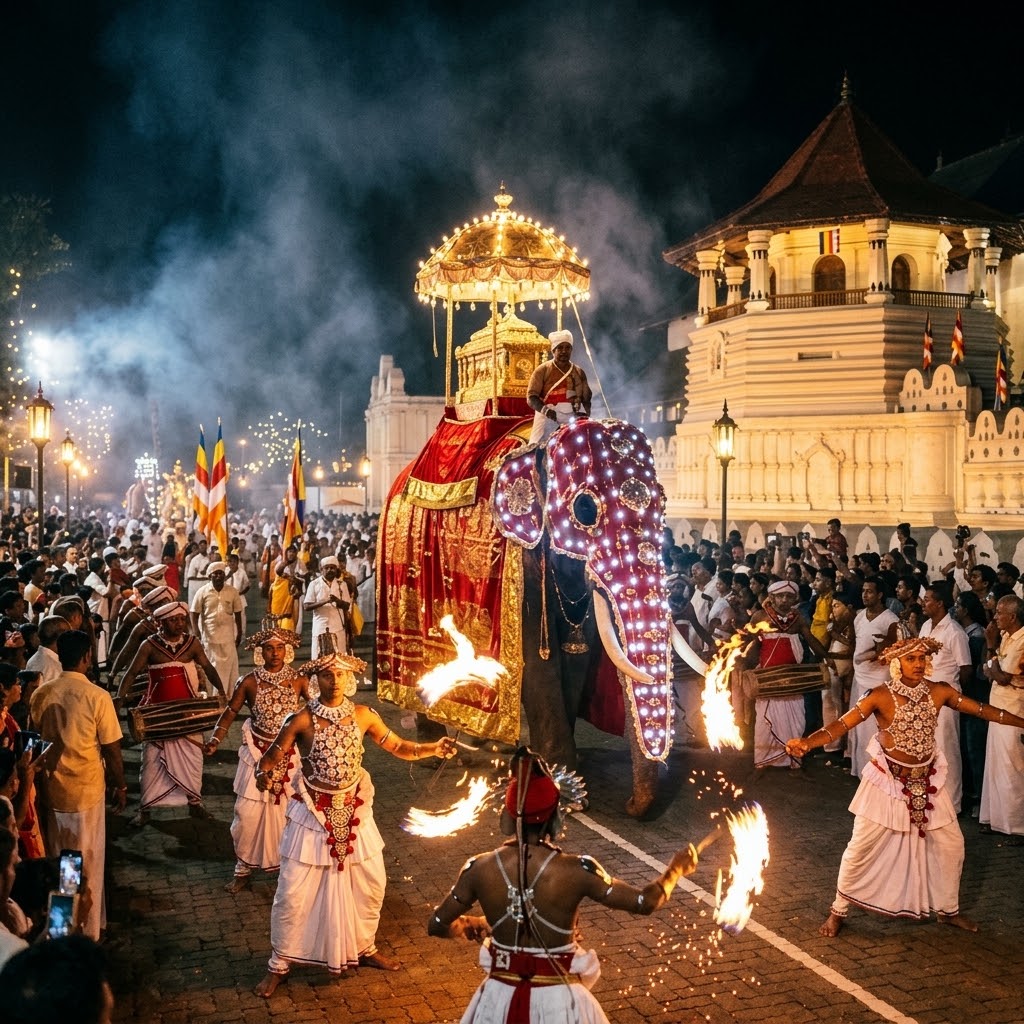
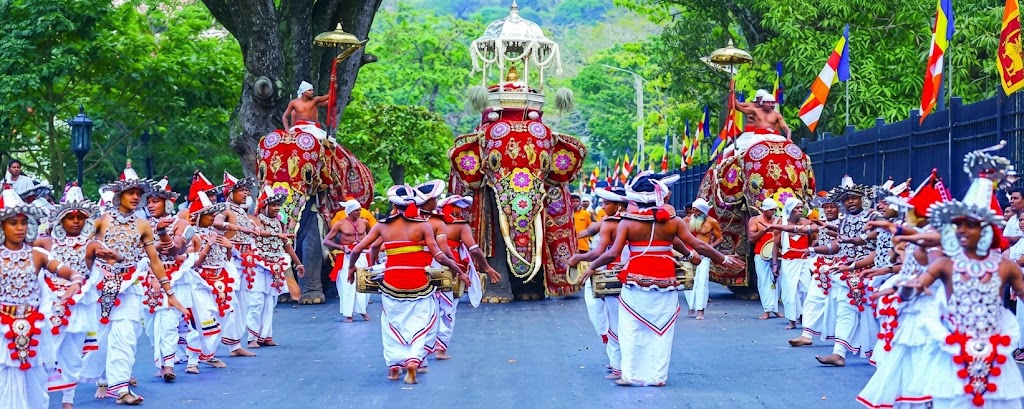
The festival opens with five nights of Kumbal Perahera, a smaller-scale procession that builds momentum gradually rather than opening at full scale. Traditionally, this stage was considered a semi-procession, shown first to infants as a way of warding off evil spells and ill will before the festival’s grander nights begin.
Each Kumbal Perahera night follows the same basic structure; drummers, dancers, and decorated elephants moving through Kandy’s streets, but on a noticeably smaller scale than what follows. It functions as a build-up, easing both participants and spectators into the full spectacle ahead.
Following the Kumbal nights, five nights of Randoli Perahera escalate in scale and intensity, culminating in the Maha Randoli Perahera, the grand final procession and the single largest night of the entire festival. This is when the streets fill to capacity, and the full ceremonial procession appears in its complete form.
The Maligawa Tusker leads the procession throughout, a specially selected elephant with gilded tusks who carries the golden reliquary casket, walking on rolls of white cloth laid down so the animal’s feet never touch bare ground. Dozens of additional elephants, dancers, drummers, and fire performers follow behind in a procession that can stretch for hours, moving slowly enough that the full spectacle can take most of the night to pass a single viewing point.
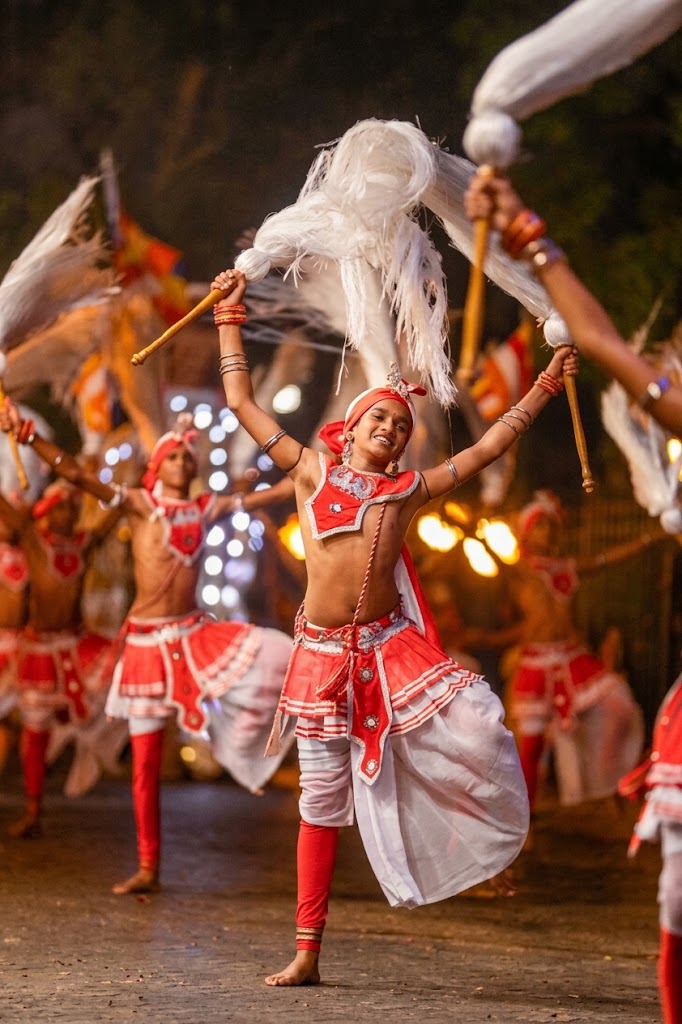
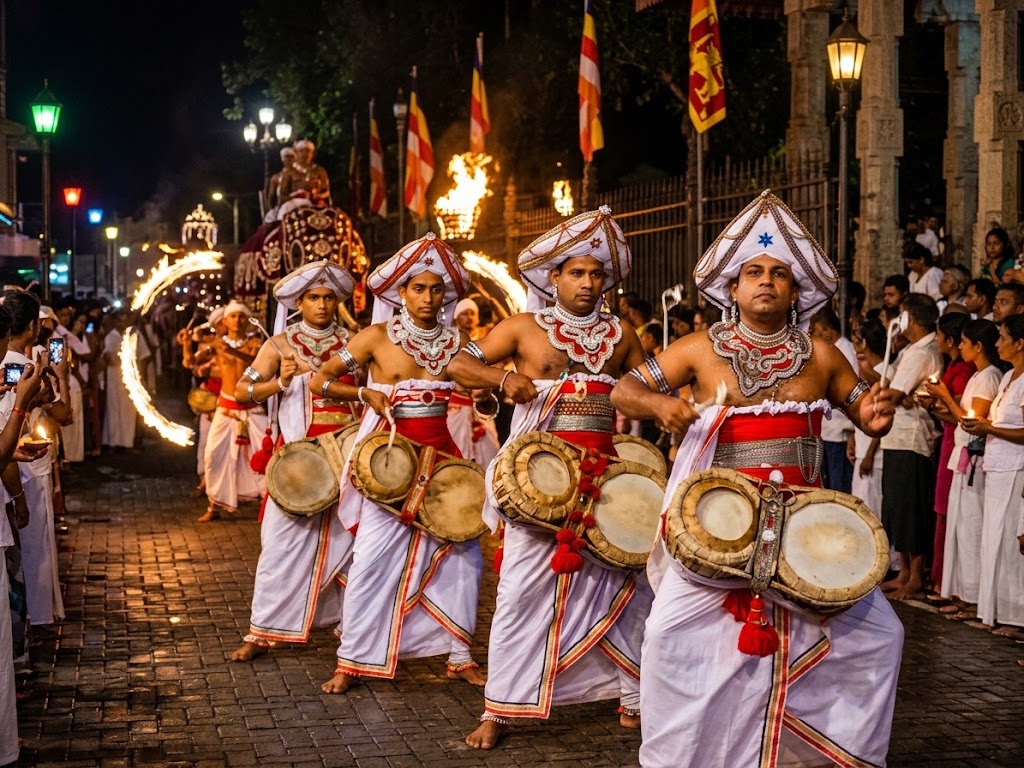
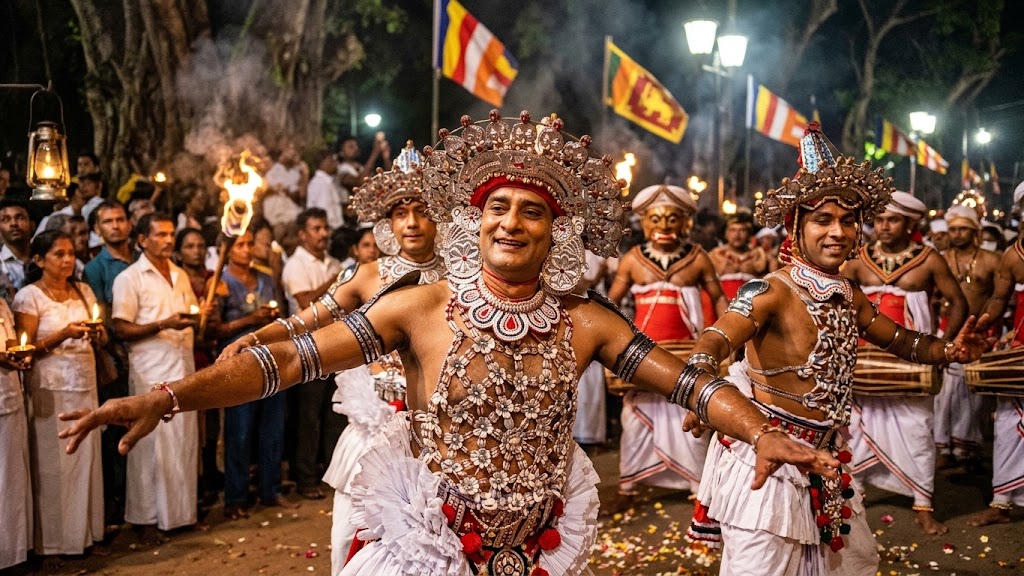
Fire dancers, whip crackers, and Kandyan drummers form the backbone of the procession’s energy, each group representing traditions passed down through generations of performing families rather than staged entertainment assembled for tourists. The rhythms and choreography follow patterns specific to this festival rather than general cultural performance.
Regional temples across Sri Lanka also send representative groups, meaning the procession isn’t purely a Kandy event but a gathering of traditions from across the island’s Buddhist and Hindu communities, reflecting the festival’s role as both religious devotion and shared cultural celebration.
The festival closes with Diya Kapeema, the water cutting ceremony, held before dawn at the Mahaweli River in Gatambe. A ceremonial sword is used to cut the surface of the water, a ritual act tied to the festival’s older roots as a request to the gods for rain and a good harvest.
Later that same day, the Dahawal Perahera, a smaller daytime procession, closes out the full festival cycle. Together, these final rituals bookend ten days that move from quiet ceremonial beginnings through to the grand nighttime spectacle and back to a simple act of devotion by the river.
Esala Perahera doesn’t run on fixed calendar dates, since it’s timed to the Esala Poya, the full moon in the lunar month of July or August, and the exact schedule is set annually by the Diyawadana Nilame, the temple’s chief lay custodian. In 2026, the festival runs from 18 to 28 August, with the Grand Randoli Procession falling on 27 August.
Because dates shift year to year, it’s worth confirming the current schedule directly with the temple rather than relying on a previous year’s calendar when planning a trip specifically around the festival.
Accommodation in Kandy fills up well in advance of festival week, and prices typically rise across the board as demand peaks alongside the final Randoli nights. Booking a stay months ahead, rather than closer to the festival dates, gives far more choice and avoids scrambling for a room during the busiest stretch of the Sri Lankan tourism calendar.
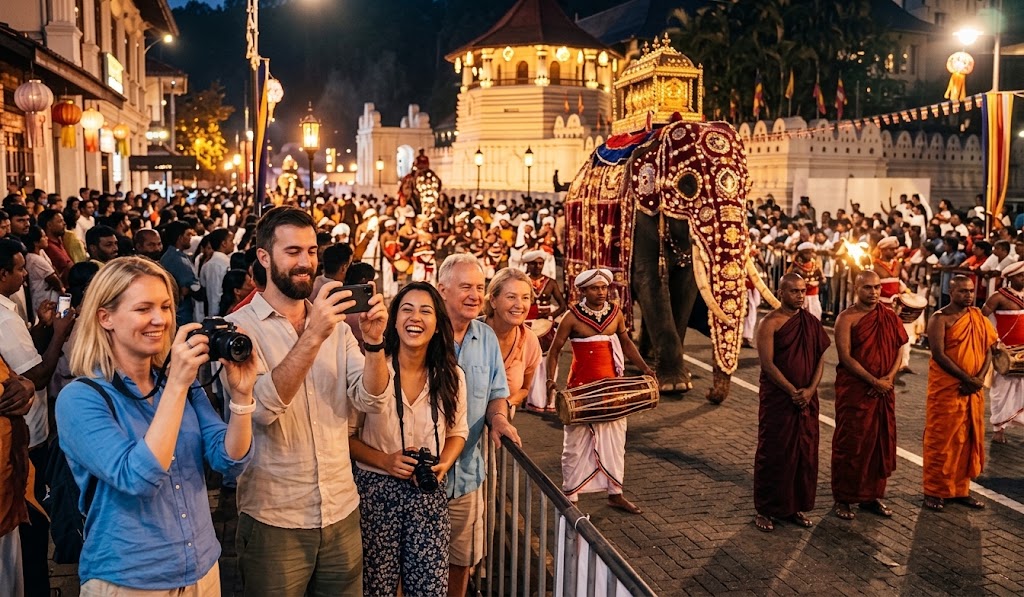
Traffic and road closures around the main procession route are standard during festival nights, so factor in extra time getting to and from your accommodation, particularly on the Maha Randoli night when crowds are at their thickest throughout the city centre.
Seating along the main route in Kandy fills quickly, and tickets or reserved viewing spots are worth arranging in advance rather than expecting to find a spot on the day itself. Locals often claim street-level positions from early morning, so arriving well before the evening start time matters if you want an unobstructed view.
Modest dress is appropriate given the religious nature of the event, and patience helps, start times can shift by half an hour or more depending on ceremonial timing that isn’t always announced precisely in advance.
The Kandy Esala Perahera remains one of Buddhism’s great living processions, ten nights building toward a single unforgettable night of fire, drums, and devotion. Planning a trip around the festival dates? MaRadha Colombo can help you build the itinerary.

Enjoy 15% OFF when you book today with promo code maradha0345, plus exclusive perks: