The Golden Cave Temple of Dambulla is one of Sri Lanka’s most remarkable cultural landmarks, featuring five ancient caves, over 150 Buddha statues, and extensive murals. Discover the history, artwork, and religious significance preserved within this remarkable UNESCO World Heritage Site.
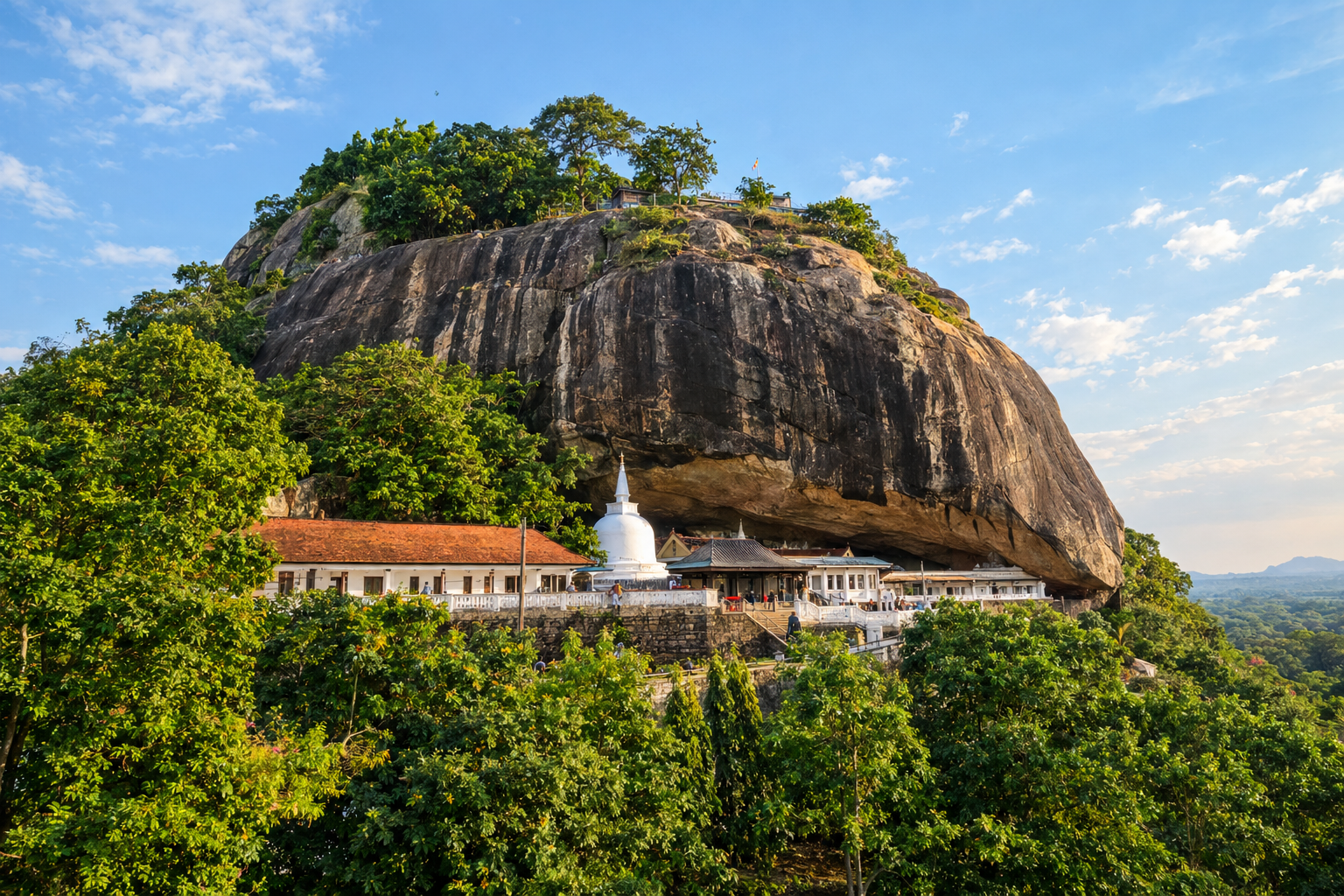
Carved into a granite outcrop rising 160 metres above the surrounding plains, Dambulla has functioned as a Buddhist site continuously since monks first settled here around the third century BC. The “golden” name comes from the gilded Buddha statues found throughout the caves in the twelfth century, and traces of that original gold are still visible on close inspection today.
Unlike sites built up from the ground, Dambulla’s five caves are cut directly beneath a single massive overhanging rock, sheltering the statues and murals inside from centuries of monsoon rain. That natural roof is a big part of why so much original artwork survives here compared to other ancient Sri Lankan sites left exposed to the elements above ground.
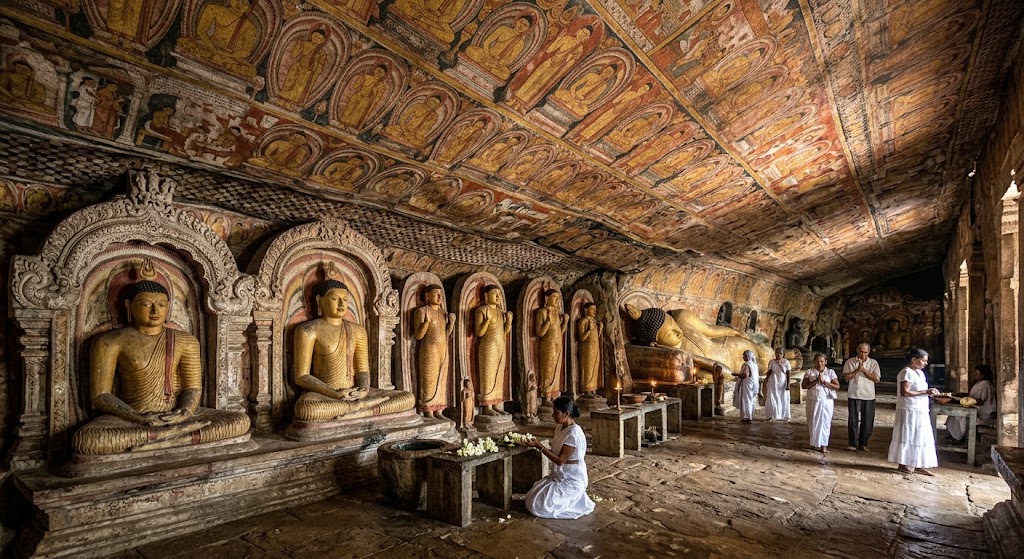
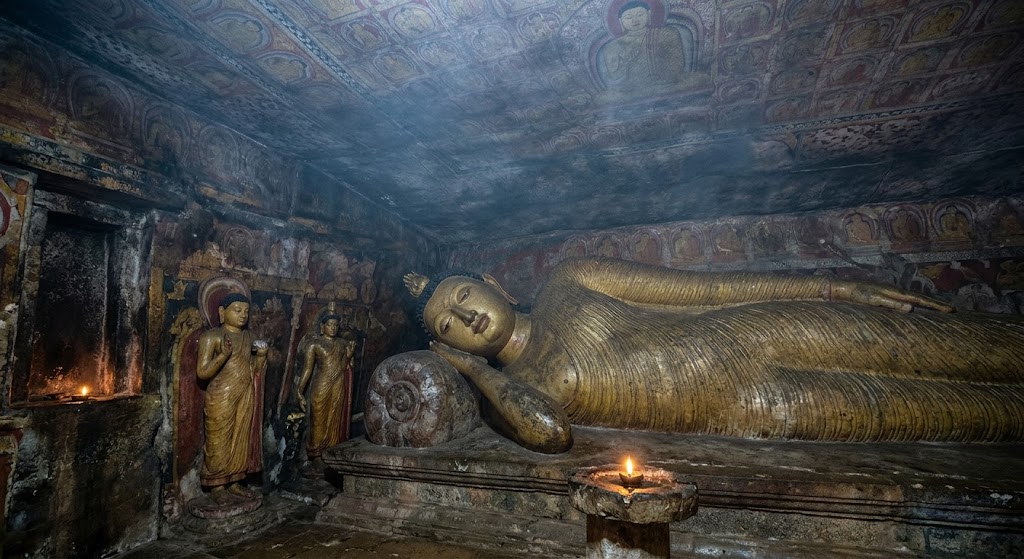
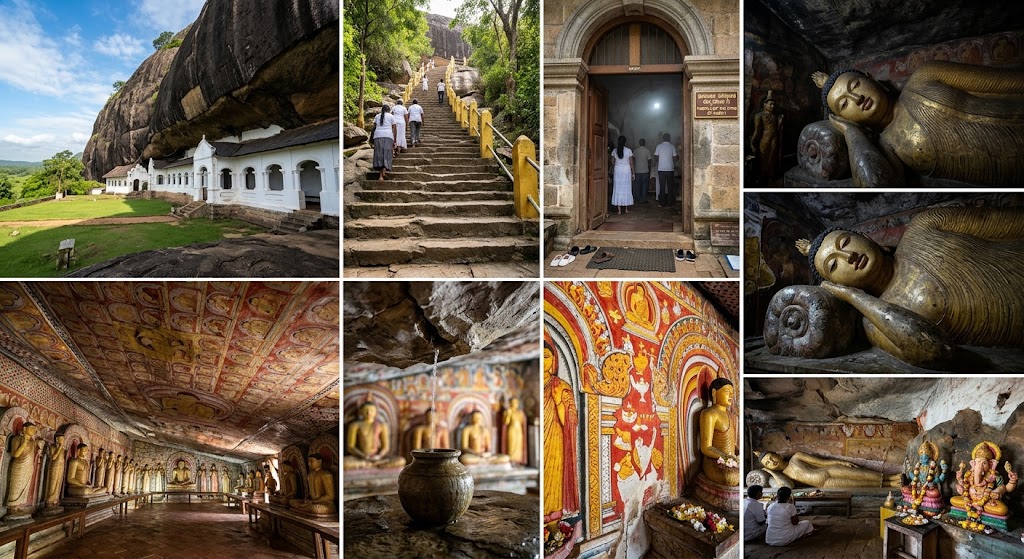
Devaraja Viharaya, the smallest of the five caves, centres on a 14-metre reclining Buddha carved directly from the living rock, depicting the moment of parinirvana. Statues of Ananda, the Buddha’s closest disciple, and King Valagamba, credited with founding the temple after taking refuge here during exile, stand nearby.
The murals here are notably faded compared to the rest of the complex, largely from centuries of oil lamp smoke and incense inside the enclosed space. It’s a smaller, quieter entry point before the scale of the caves that follow, and a useful place to slow down before the more elaborate spaces ahead.

Maharaja Viharaya is Dambulla’s largest and most spectacular cave, stretching roughly 52 metres wide and 23 metres deep, holding over 50 Buddha statues in seated, standing, and reclining postures. A gilded standing Buddha beneath a carved dragon arch, commissioned by King Nissankamalla, anchors the space.
The ceiling murals here flow continuously from one scene to the next without visible breaks, creating an overwhelming effect that took shape across multiple centuries of painting and repainting. A natural spring still drips from the ceiling into a stone pot the monks consider sacred, even during the driest months of the year.
Maha Alut Viharaya, added during the Kandyan period in the eighteenth century, holds around 50 Buddha images and murals in a noticeably bolder, more colourful style than Cave II’s earlier work. Pachima Viharaya, smaller again, centres on a Buddha statue seated beneath its own dragon arch alongside a dagoba.
Devana Alut Viharaya, the newest cave, blends Buddhist and Hindu imagery, featuring reclining Buddha figures alongside Hindu deities, a reflection of the more syncretic religious practices of the period it was built in.
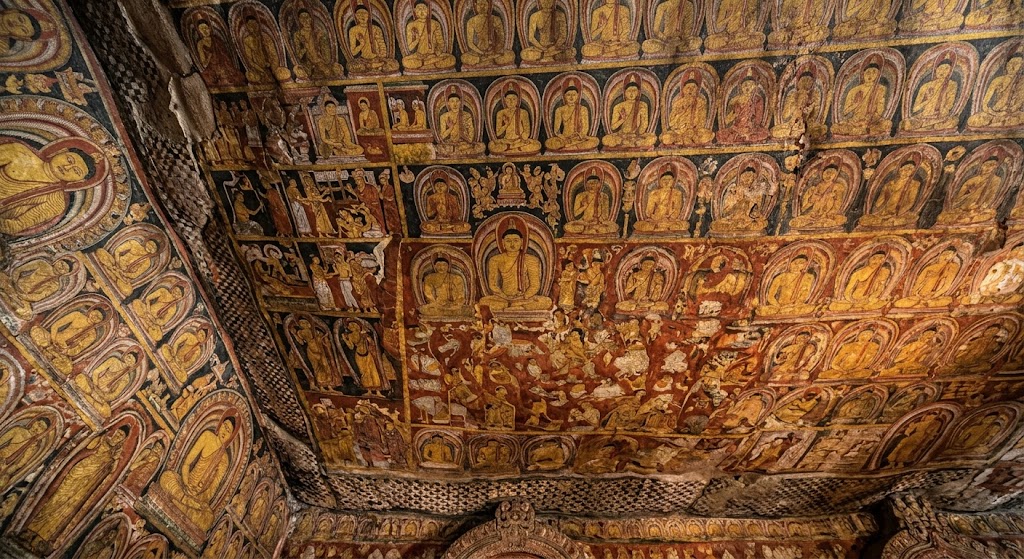
Painted with natural pigments across roughly 2,100 square metres of ceiling and wall space, Dambulla’s murals depict the life of the Buddha, Jataka tales, and events from Sri Lankan Buddhist history, spanning artistic styles from the first century BC through the Kandyan era. Reds, blues, and gold tones remain strikingly vivid in places despite their age.
Mara’s temptation of the Buddha is among the most frequently pointed-out scenes, alongside royal processions and depictions of historical kings tied to the temple’s founding and later restoration. Guides on-site can usually walk you through which century a given section dates to.
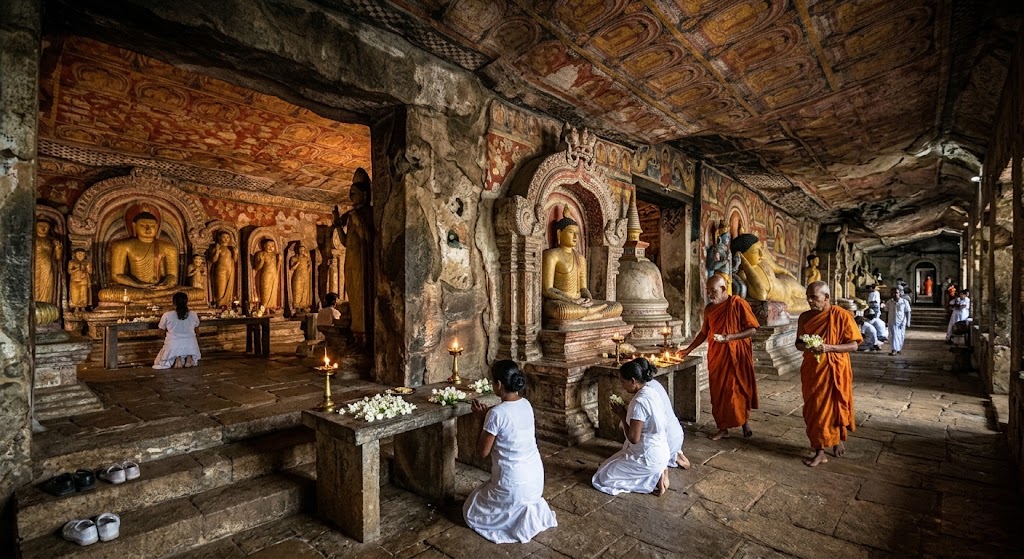
Reaching the temple involves a climb up rock-cut stairs, steep enough to work up a sweat before stepping into the cool, dim interior, a deliberate contrast that makes the transition into the caves feel more dramatic. Shoes come off before entering, standard practice at any active Buddhist site.
Modest dress covering shoulders and knees is required throughout, and photography rules vary slightly by cave, so it’s worth checking with on-site staff before shooting inside the more sensitive shrines. Morning visits generally offer cooler conditions for both the climb and the caves themselves.
Dambulla sits about 24km from Sigiriya, roughly a 30-minute drive, making it a natural pairing with a Sigiriya or Pidurangala climb on the same trip. Habarana and Kandalama both sit close enough for an easy add-on if you’re already staying nearby for a Minneriya safari.
Entry fees for foreign visitors are set by Sri Lanka’s Central Cultural Fund and have shifted over the years, so it’s worth confirming the current rate before you go rather than relying on an older listing.
Two thousand years of continuous worship, gilded statues, and vivid murals make the Golden Cave Temple of Dambulla one of the Cultural Triangle’s essential stops. Planning your route? MaRadha Colombo can help fit it into your itinerary.
Enjoy 15% OFF when you book today with promo code maradha0345, plus exclusive perks: