Blog

Ritigala Monastery - A Guide to Sri Lanka’s Ancient Hermitage

Ritigala Monastery is an ancient forest hermitage hidden within Sri Lanka’s Ritigala Strict Nature Reserve. Surrounded by dense jungle and misty mountains, its stone pathways, meditation platforms, and ruins reveal a fascinating chapter of Sri Lanka’s Buddhist history and monastic life.

Ritigala Monastery - Ancient Origins and Early History

Ritigala’s name comes from the Pali “arittha” and Sinhala “gala,” together meaning roughly “rock of safety,” and hermits began settling on this remote mountainside as far back as the third century BC seeking exactly that kind of refuge from the world below.

In 833 CE, King Sena I formalised that retreat by building an extensive monastery here specifically for the Pansukulikas, a reformist ascetic order whose name literally means “rag-robe wearers.” They’d grown troubled by what they saw as increasing wealth and laxity among mainstream monks, and Ritigala became their answer to it.

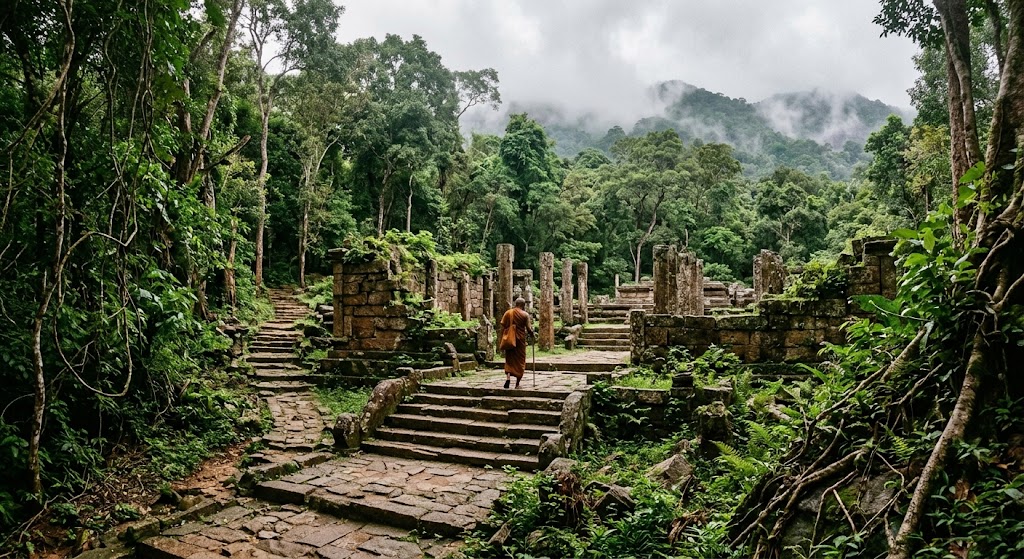
Ancient stone ruins of Ritigala Monastery in the forest

The Pansukulika Monks of Ritigala Monastery

The Pansukulika monks practiced deliberate austerity, rejecting material comfort as part of their path toward enlightenment. Unlike most Buddhist monastic complexes across Sri Lanka, the Ritigala site contains no stupas, no Buddha statues, and no Bo trees, a striking absence that sets it apart from virtually every other ancient religious site on the island.

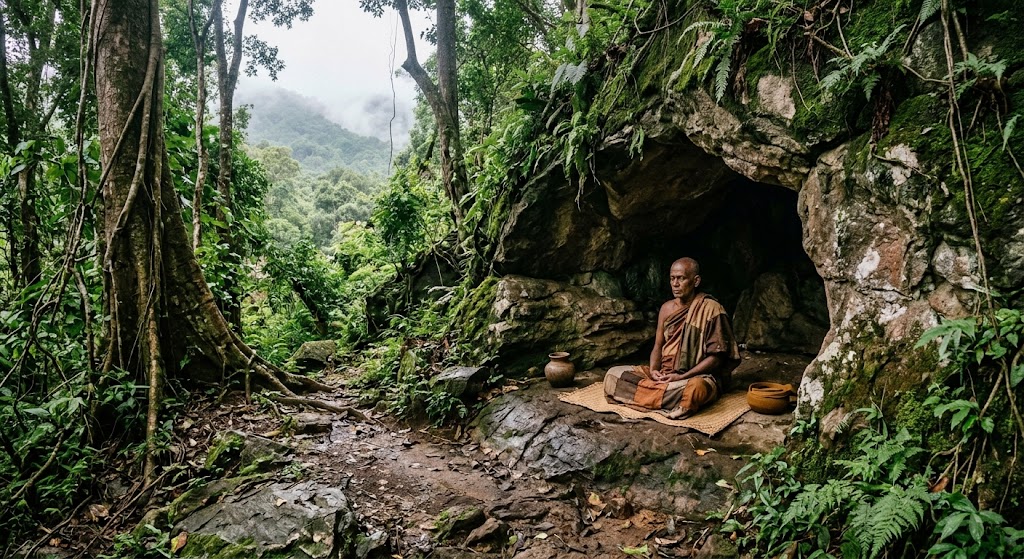
Stranger still, the monastery has no residential quarters at all. Evidence suggests the monks lived in natural caves scattered through the surrounding forest rather than built shelters, treating physical discomfort as part of the discipline rather than something to be engineered away.

Ritigala’s Mysterious Stone Platforms

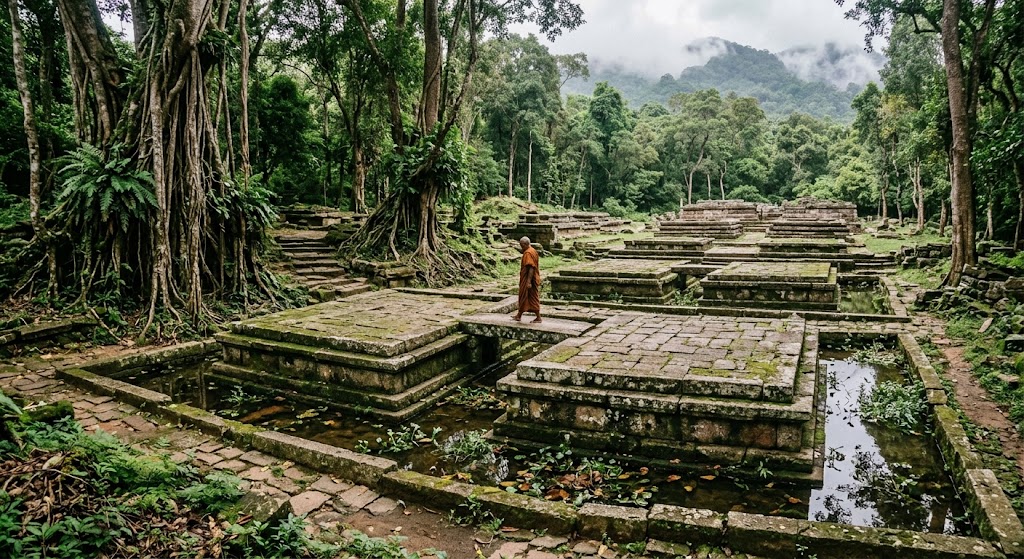
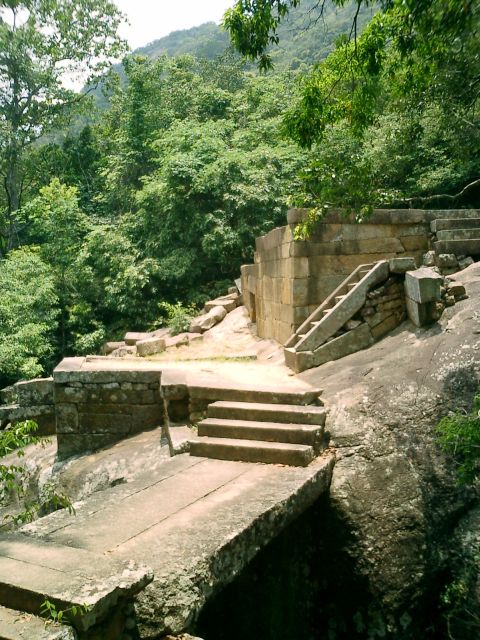
Scattered across the 24-hectare complex are structures called padhanaghara, pairs of raised stone platforms aligned east to west, connected by a small stone bridge and surrounded by a shallow moat-like border. Dozens of these platforms exist across the site, and their exact purpose remains genuinely unresolved.

Archaeologists have proposed meditation halls, libraries, or ritual spaces, but no single theory has taken hold as definitive. That unanswered question is a large part of what gives Ritigala its reputation as one of Sri Lanka’s most enigmatic archaeological sites rather than simply an old ruin.

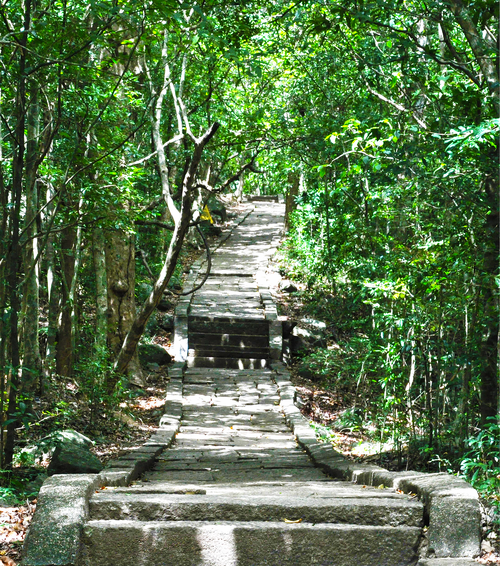
Stone pathway through the forest at Ritigala Monastery

The Ancient Hospital at Ritigala Monastery

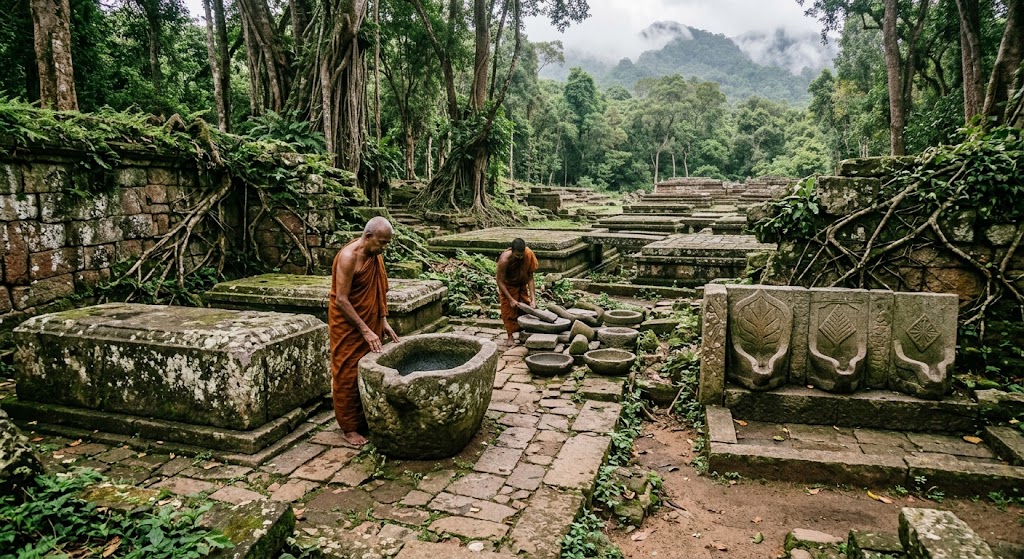
Partway up the mountain sit the remains of what appears to be a genuinely advanced medical facility for its time, including stone beds where patients would have lain, oil-bath chambers, and grinding stones likely used for preparing herbal medicines. The level of anatomical and pharmaceutical understanding implied here surprises most visitors who stumble on it.

Even a set of preserved stone urinals survives at the site, decorated in a way nothing else at Ritigala is, suggesting a level of care given specifically to this part of the complex. It’s one of the clearer, more concretely understood sections of an otherwise mysterious site.

Stone platforms of the ancient hospital at Ritigala Monastery

Legends, Myths and Folklore of Ritigala Monastery

Ritigala’s mountain also carries mythological weight beyond its monastic history. Local legend ties the site to the Ramayana, identifying it as the point from which Hanuman leapt back toward India after locating Sita during her captivity. Another legend recalls a duel between two giants, Soma and Jayasena, tied to the mountain’s older folk name.

Locals sometimes refer to Ritigala as “Dreadful Mountain,” a name whose origin has faded even as the label itself persists, adding one more layer of local lore to a site already thick with unanswered questions.

Forest-covered ruins at Ritigala Monastery

What to Know Before Visiting Ritigala Monastery

Parts of the complex have been carefully cleared and restored, including the ancient bathing reservoir near the entrance, credited to King Pandukabhaya and likely used for ritual cleansing before monks entered the monastery grounds. Other sections remain partly reclaimed by forest, deliberately left as found rather than fully excavated.

The path through the ruins is straightforward walking rather than a technical hike, though the site’s remoteness inside a strict nature reserve means fewer facilities and far fewer visitors than better-known Cultural Triangle stops nearby.

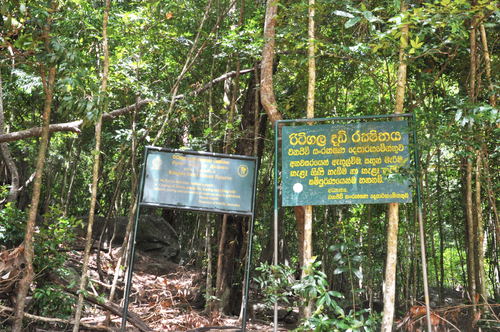
Signboards at the entrance to the Ritigala reserved forest

Essential Tips for Visiting Ritigala Monastery

Ritigala’s paths run through genuine forest rather than a manicured heritage park, so sturdy footwear and insect repellent matter more here than at most Cultural Triangle sites. There’s minimal shade cover in places, so sun protection and water are worth carrying rather than assuming you’ll find them on-site.

A local guide familiar with the site adds real value here, given how much of what you’re looking at still lacks a confirmed explanation. Without context, easy to walk past a padhanaghara platform without realising what you’re looking at is one of the site’s central mysteries.

Visitor sitting among the ruins of Ritigala Monastery

How to Get to Ritigala Monastery from Habarana

Ritigala sits roughly 45 minutes from Sigiriya and a similar distance from Habarana, making it a realistic add-on for travellers already based in the Cultural Triangle rather than a standalone destination. Anuradhapura is about 43km away, so pairing the two in a single day is common.

Because Ritigala sees a fraction of the visitors Sigiriya or Dambulla attract, arriving without a fixed schedule and simply taking time to explore tends to suit the site better than a rushed stop between other bookings.

Visitor exploring the stone ruins of Ritigala Monastery

Ritigala rewards visitors willing to sit with unanswered questions rather than tidy explanations, one of Sri Lanka’s genuinely unresolved ancient mysteries. Curious about adding it to your Cultural Triangle route? MaRadha Colombo can help build the itinerary.

Unlock the ultimate luxury experience at MaRadha Colombo!

Enjoy 15% OFF when you book today with promo code maradha0345, plus exclusive perks:

MaRadha Colombo offers breathtaking landscapes, exquisite amenities, and an extraordinary experience for every traveler.