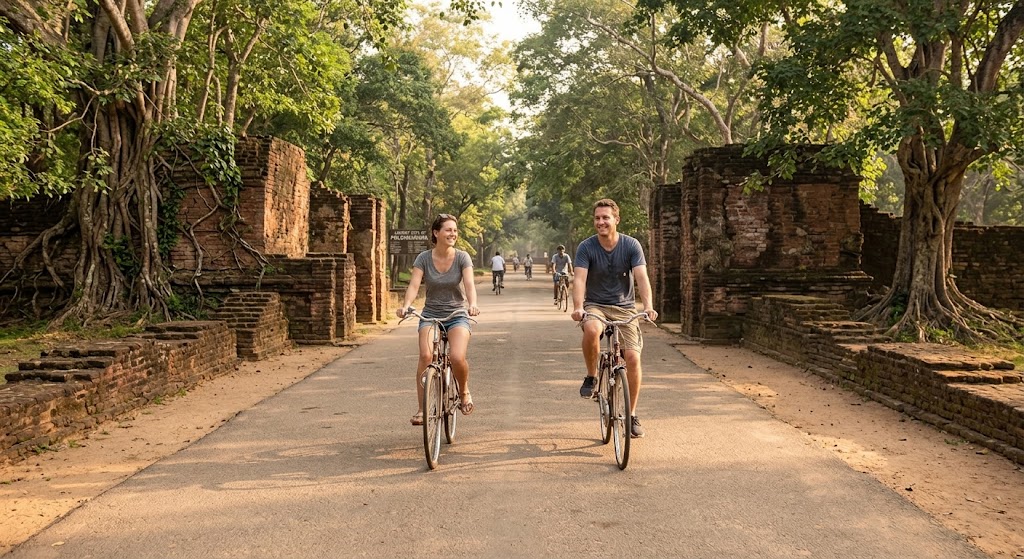
Cycling in Polonnaruwa is one of the best ways to explore Sri Lanka’s ancient capital, with historic ruins, temples, statues, and reservoirs spread across a compact area. Discover the best cycling routes, key sights, practical tips, and everything to know before riding.
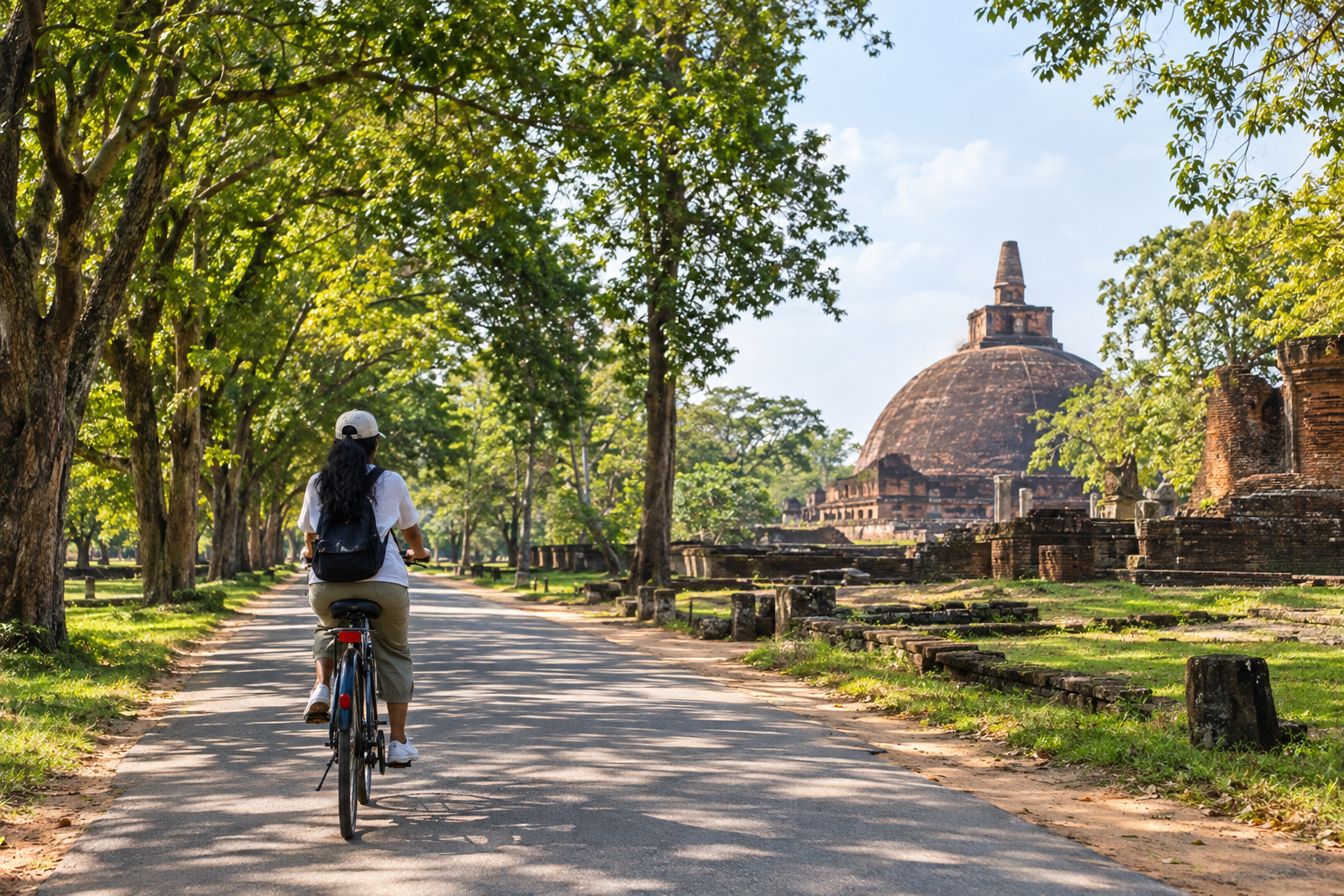
Polonnaruwa’s ruins spread across roughly 4 square kilometres of flat parkland bordering the Parakrama Samudra reservoir, connected by shaded, tree-lined boulevards built for exactly this kind of movement. Walking the full site in Sri Lanka’s heat is genuinely tiring; cycling turns the same distance into an easy, breezy morning that leaves you with energy left over for the rest of the day.
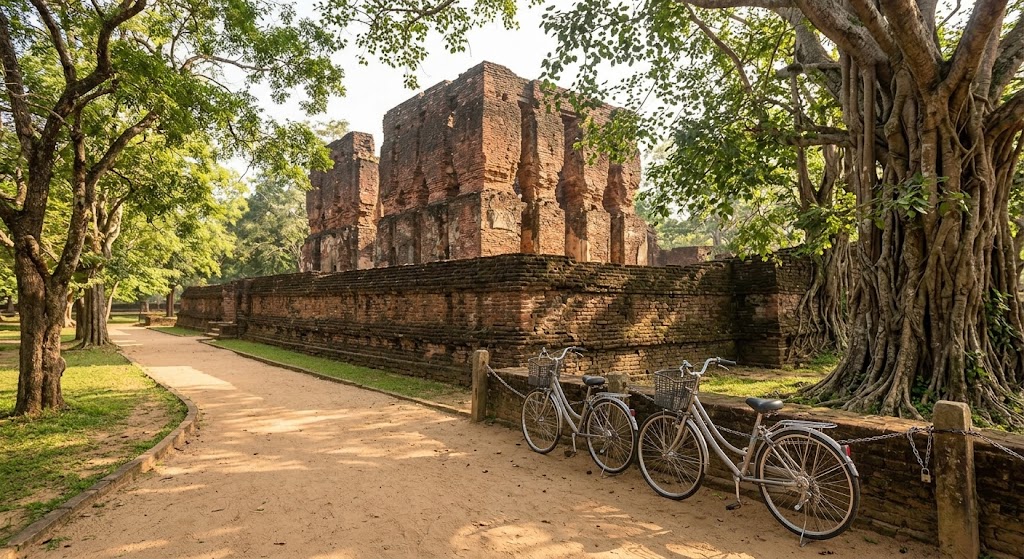
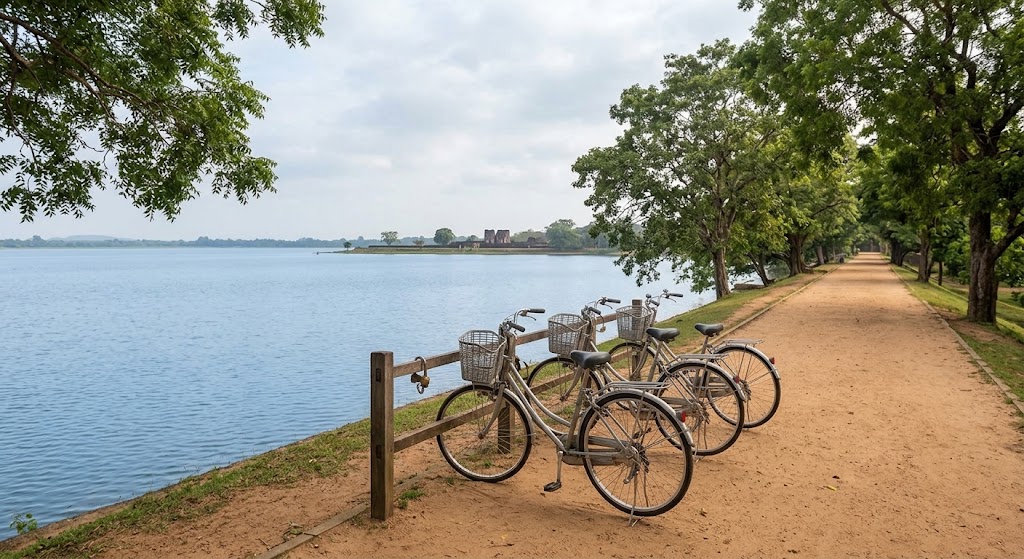
Most rental bikes here are simple fixed-gear city bikes, which suit the terrain perfectly since there’s no real elevation change anywhere on site. You won’t need gears or suspension, just a reasonably comfortable seat and a basic lock for stopping at each ruin along the way.
Bike rental shops cluster around the museum and the site entrance, typically charging somewhere between LKR 300 and 500 for a full day. Many hotels in Polonnaruwa town also rent bikes directly, so it’s worth checking with your accommodation before heading to a street stall.
Entrance tickets are purchased at the Archaeological Museum, generally running close to $25 USD, and include admission to the museum itself, worth a short visit before you start riding. Ask for a site map at the ticket counter, it’s sometimes only handed over if requested rather than offered automatically, and having one on hand makes navigating between the more spread-out sites considerably easier.

The exhibits here explain what you’re about to see, which makes the ruins themselves land differently once you’re standing in front of them. From the museum, a short ride connects to the ticket checkpoint at the ancient city entrance. Some visitors rent bikes at the museum and ride the short stretch of open road to reach the site gate, which involves a few minutes of mixing with local traffic before reaching the quieter internal paths.
The Palace Complex of King Nissanka Malla is a natural first stop after entering the ancient city, with the ruins of an audience hall and council chamber giving a sense of how the medieval court functioned. From here, the route continues toward the Royal Palace of King Parakramabahu.
Parakramabahu’s palace, once reportedly seven storeys tall, now stands as a thick-walled ruin that still conveys its original scale even in partial collapse. Cycling directly between these two palace sites takes only a few minutes on flat, shaded roads.
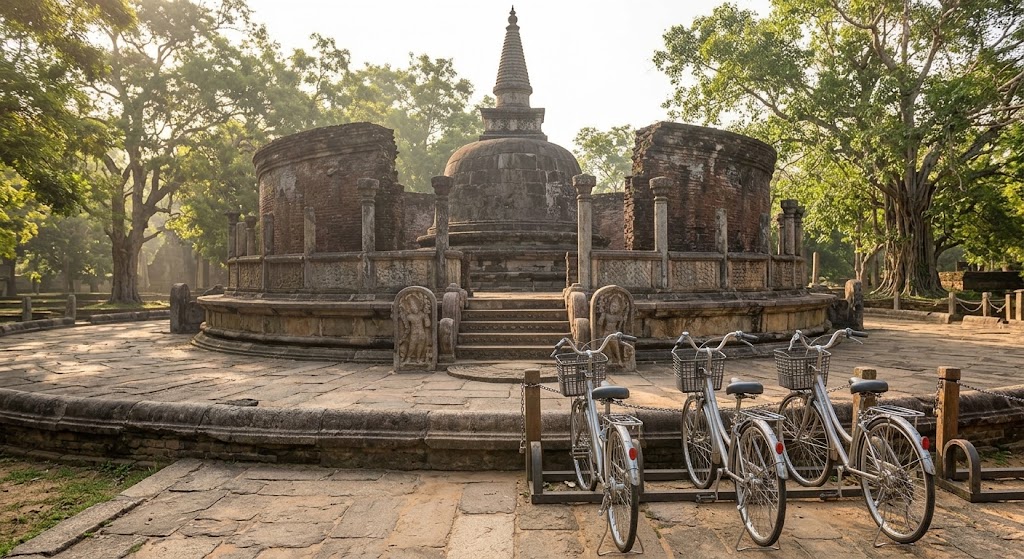
The Sacred Quadrangle groups several of Polonnaruwa’s most significant religious structures into one compact area, including the Vatadage, a circular relic house considered one of the finest examples of ancient Sinhalese architecture. It’s worth spending real time here rather than rushing through.
Nearby, the Rankoth Vehera, the site’s largest stupa, and the smaller Pabalu Vehera round out this section of the ride. The clustering of these structures means less cycling and more walking-and-looking in this part of the itinerary compared to earlier stops.
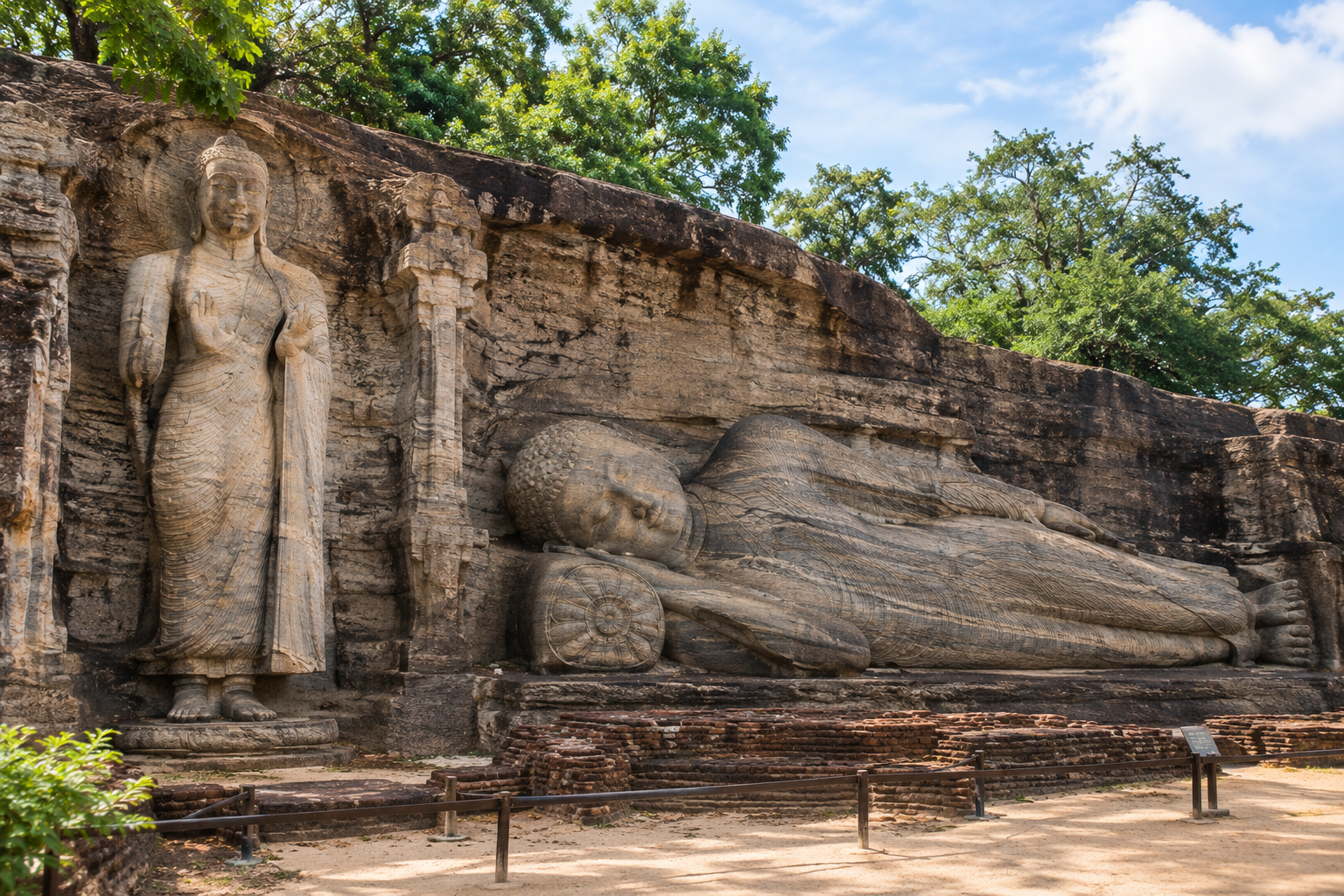
Gal Vihara is widely considered the highlight of the entire site; four Buddha statues carved directly into a single granite rock face, including a reclining figure nearly 14 metres long. Photography is generally allowed here, though modest dress and respectful behaviour are expected at all Buddhist sites.
The ride to Gal Vihara from the Sacred Quadrangle continues along the same shaded boulevards, making it an easy addition rather than a detour. Most cycling itineraries treat this stop as the natural midpoint of the day, both geographically and as the visual high point of the ride.
Keen cyclists can continue past the main ruins to ride along the edge of Parakrama Samudra, the vast reservoir built by King Parakramabahu that still irrigates surrounding farmland today. It’s a quieter, more scenic stretch than the archaeological zone itself, with water views replacing ruins.
This extension isn’t essential to seeing Polonnaruwa’s key sites, but it’s a good option if you’ve got energy left and want to stretch the ride into a fuller half-day rather than wrapping up early.
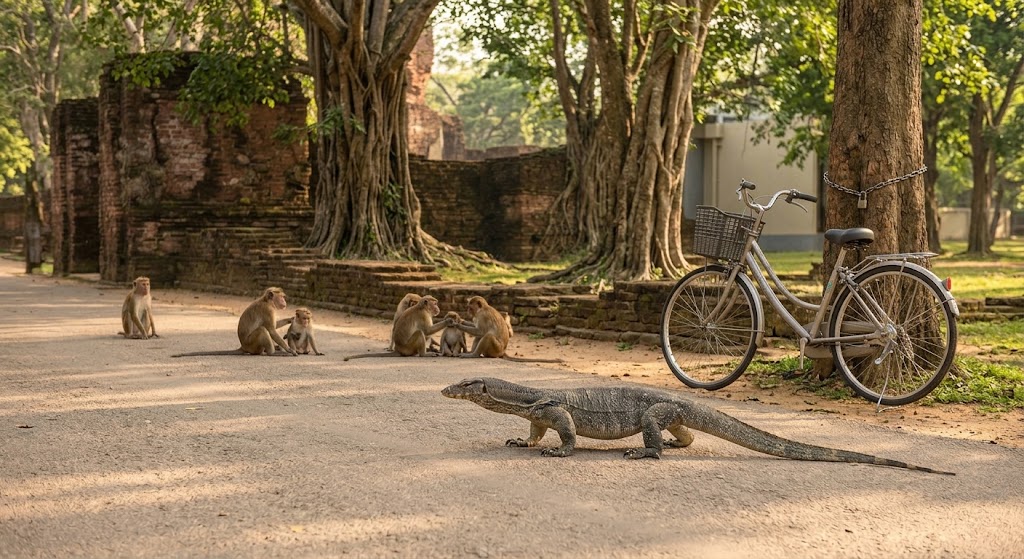
Polonnaruwa’s grounds double as a quiet wildlife spot even outside the ruins themselves; water monitor lizards are common along the paths, and troops of toque macaques move freely through the trees near several of the larger stupas. Neither poses a real risk if you keep a sensible distance.
Keep food out of sight while cycling between sites, since monkeys around the more popular ruins have learned to associate visitors with snacks. It’s a minor consideration, but one worth knowing before you’re caught off guard mid-ride.
Start early, ideally before 9am, and plan to be mostly done or taking a shaded break by 11am, since the site offers little shelter from direct sun between late morning and early afternoon. Guided tours and independent cyclists alike generally treat this window as non-negotiable.
A full loop covering the main sites takes roughly four to five hours at a leisurely pace, including stops. Wear shoes that slip on and off easily, since several religious sites require removing footwear before entering.
Polonnaruwa’s flat, shaded layout makes cycling the obvious way to see centuries of history without exhausting yourself in the process. Planning a Cultural Triangle route that includes Polonnaruwa? MaRadha Colombo can help build the ride into your itinerary.
Enjoy 15% OFF when you book today with promo code maradha0345, plus exclusive perks: