
Sigiriya Rock vs Pidurangala offers two very different climbing experiences in Sri Lanka. While Sigiriya combines ancient history, dramatic ruins, and iconic views, Pidurangala delivers panoramic scenery and a more adventurous climb. Discover which rock suits your trip, budget, and interests.
Most travellers don’t climb Sigiriya or Pidurangala just to reach the top, they climb to stand somewhere a fifth-century king once stood, or to see one of Sri Lanka’s most photographed landmarks from an angle almost nobody else gets. That’s the real draw behind both climbs, and it’s worth being honest about which pull is stronger for you before deciding, since the two experiences aren’t really substitutes for each other.
If what matters most is understanding the history; a palace built on top of a rock, frescoes that have survived over a thousand years, a story of ambition and defeat, that belief points toward Sigiriya. If what matters more is the physical reward of a harder trail and a view that captures the whole story at once, that points toward Pidurangala instead.
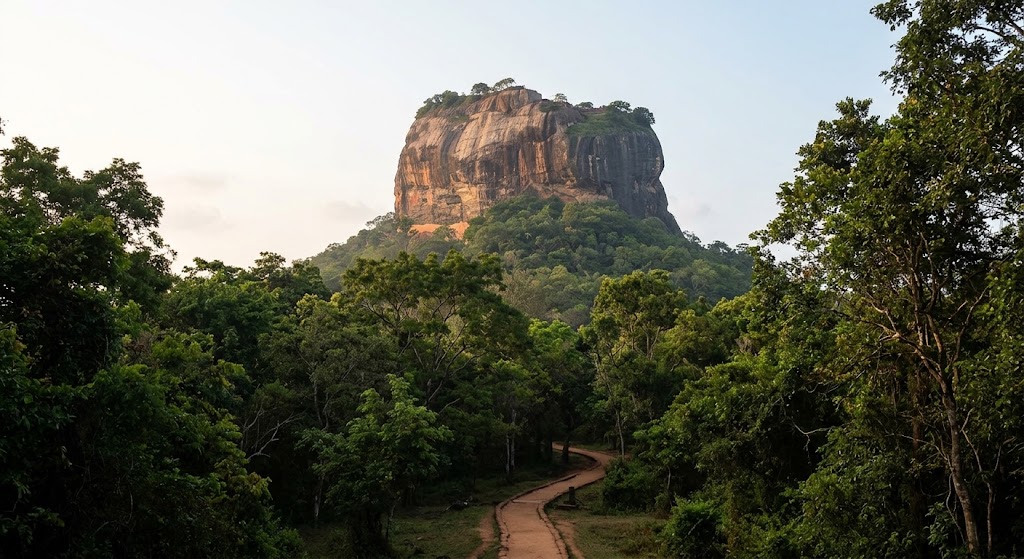
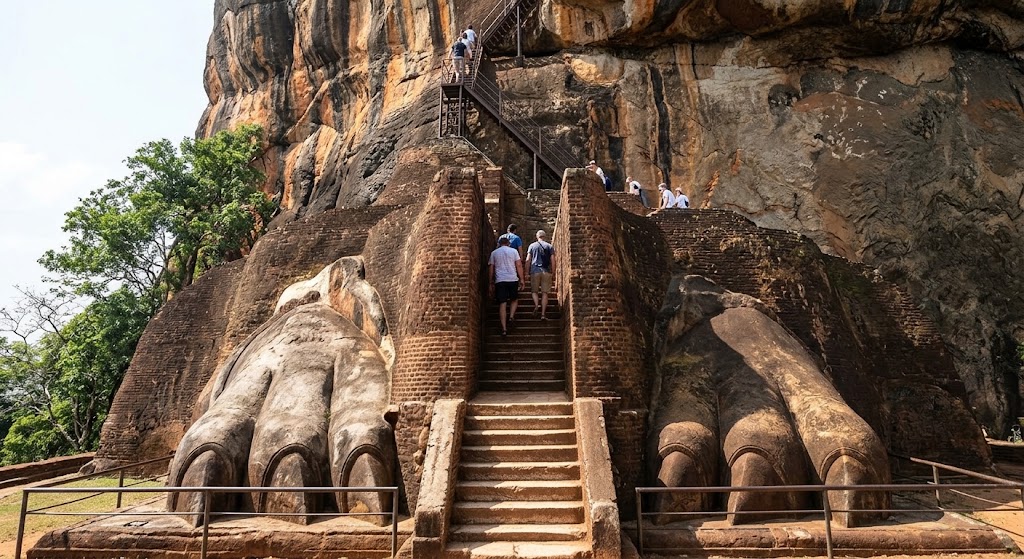
Sigiriya delivers its version through structure, nearly 1,200 steps built directly into the rock face, passing frescoes, mirror-polished walls, and the giant lion’s paw entrance that gives the rock its name. It’s a curated ascent through layers of history, engineered centuries ago and still walkable today. The experience is guided by what’s already there, not by the terrain itself.
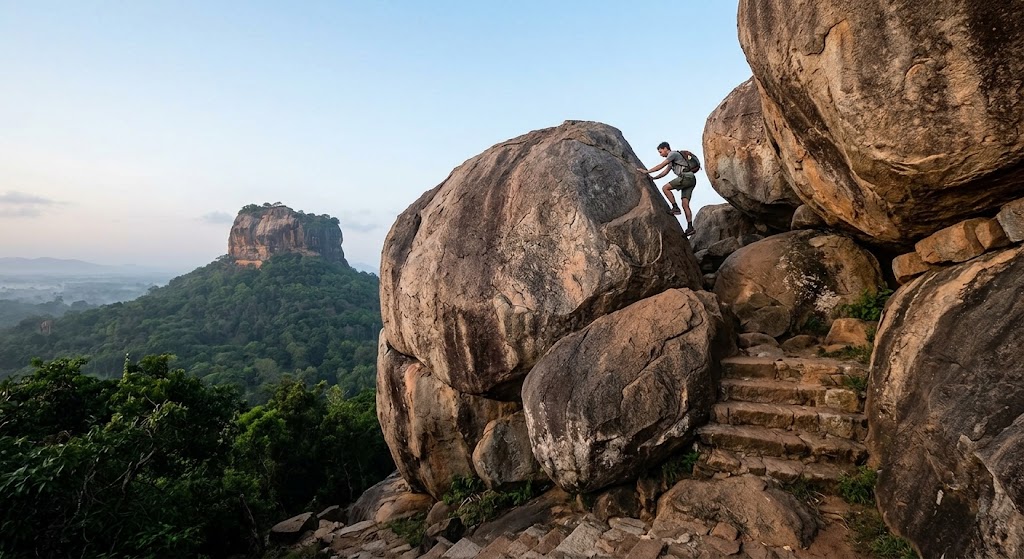
Pidurangala works differently. There’s no palace to walk through, no frescoes to pause at, just a forest trail that turns into a boulder scramble near the summit, delivering its payoff in a single moment at the top rather than gradually along the way. It’s a rawer, more physical version of the same basic idea: climb something, and see Sri Lanka differently for it.
Sigiriya’s entrance fee runs around $30 to $35 USD for foreign adults, priced in line with major heritage sites like Angkor Wat or Machu Picchu. Pidurangala costs a fraction of that, typically LKR 500, framed as a donation to the temple rather than a formal ticket. The gap in price roughly matches the gap in what each climb sets out to deliver, so neither option feels like it’s overcharging for what it actually offers.
Sigiriya takes two to three hours round trip on mostly metal staircases, some sections exposed enough to bother anyone uneasy with heights. Pidurangala takes closer to an hour, mixing stone steps with a genuine rock scramble that demands more physical effort in a shorter span.
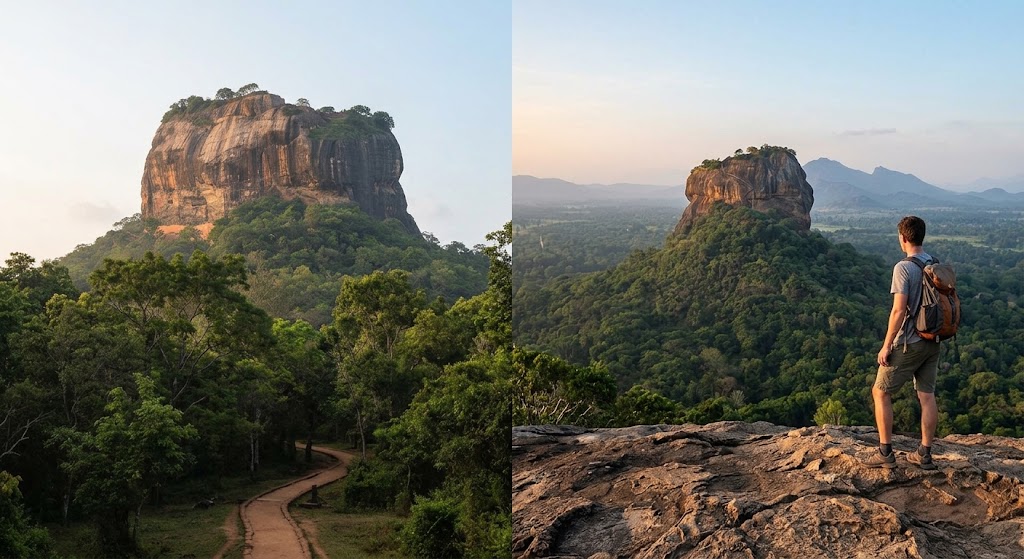
Pidurangala’s summit delivers something Sigiriya can’t: Sigiriya rock itself, framed by jungle canopy below, a photograph that’s physically impossible to take while standing on Sigiriya. It’s the single strongest argument in Pidurangala’s favour, and it’s the image most people already associate with the area without realising where it was taken from.
Sigiriya’s own summit view is broader but less specific; flat forest stretching toward distant hills, striking for its scale rather than for any single focal point. If the photo in your head is of the rock, not from it, only one of these climbs gets you there.
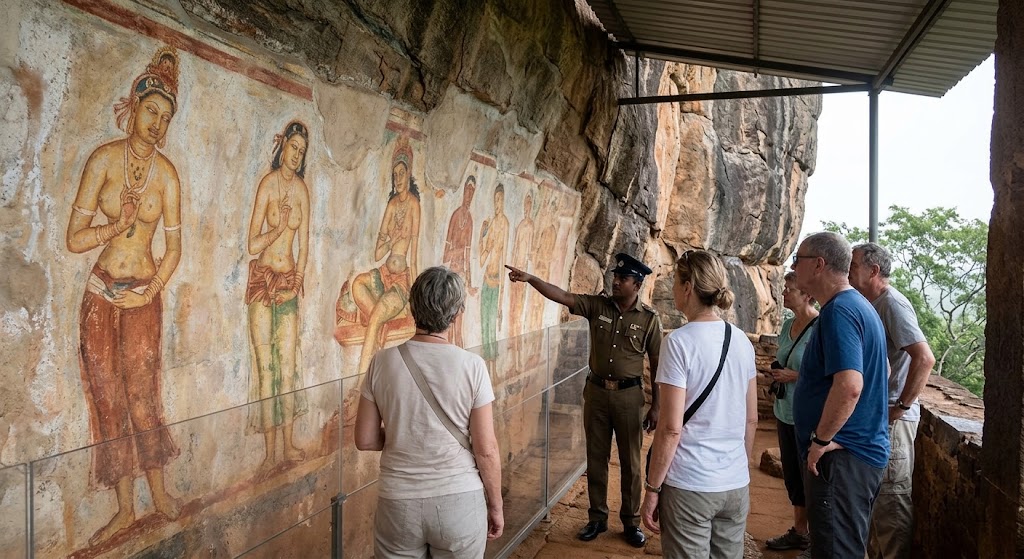
Sigiriya draws steady tourist traffic through the day, with tour groups often bottlenecking the staircases during peak hours. Early entry, close to the 5:30am ticket office opening, avoids both heat and crowds. Pidurangala stays quieter overall, though local visitor numbers rise noticeably on Sundays.
Sunrise favours Pidurangala specifically; cooler hiking conditions, plus the chance to watch Sigiriya catch early light from across the valley. Both climbs reward getting there before the day heats up, but only one turns that timing into part of the actual experience.
Sigiriya has minimal facilities near the entrance but nothing on the climb itself, so bring water, sunscreen, and ticket cash beforehand. Photography is restricted inside the fresco gallery partway up, worth knowing before you start so you’re not caught off guard mid-climb.
Pidurangala has no facilities at all, not even near the base, so buy supplies in Sigiriya village first. Neither climb offers anywhere to restock once you’ve committed to the trail, so treat preparation as part of the decision, not an afterthought.
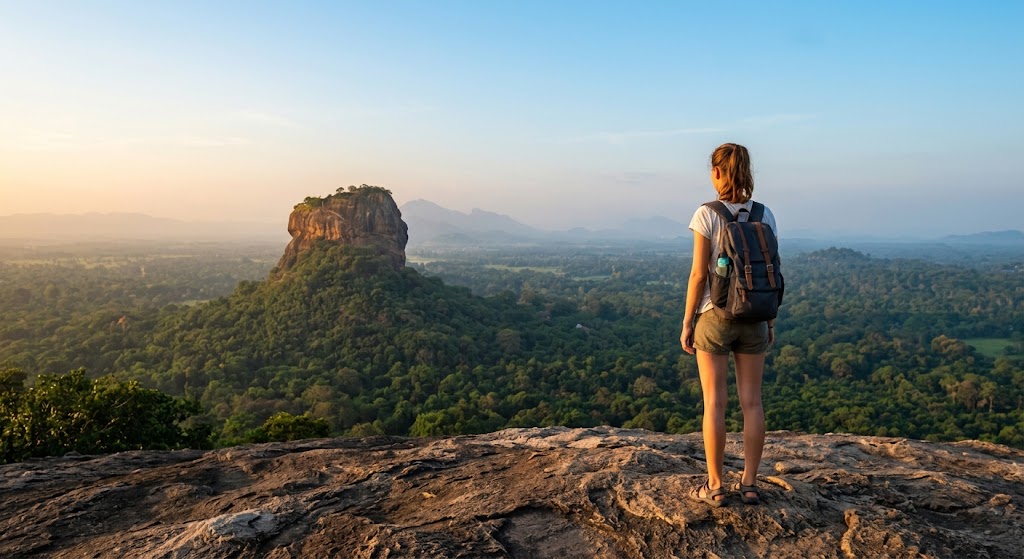
Many visitors end up climbing both in the same trip, since the two rocks sit close enough together to combine without losing much time. A common sequence is Pidurangala at sunrise for the view, followed by Sigiriya later that morning or the next day for the history.
If you can only choose one, let the “why” from earlier guide it: history and engineering point to Sigiriya, a harder climb and a better photograph point to Pidurangala. Neither choice is the wrong one, they’re simply answering different questions.
Sigiriya rewards history and patience, Pidurangala rewards effort and a sharper photograph, knowing your “why” makes the choice easy. Planning your Cultural Triangle route? MaRadha Colombo can help fit both climbs into your itinerary.

Enjoy 15% OFF when you book today with promo code maradha0345, plus exclusive perks: